-
Branch 1: Straumann TiBase and other implant restorative components
-
Branch 2: Straumann CARES Scan Body and the digital workflow
-
Branch 3: Dental compressor — an infrastructure decision with a total-cost problem
-
What is a dental sealant? A clinical question in a procurement list
-
The boundary case: ostomy supplies don't fit a dental checklist
-
How to tell which branch you are in
I'd like to give you one simple purchasing rule for dental products. I can't. I'm a quality and compliance manager in the dental device world, and I review roughly 200 unique SKUs a year. Many are restorative components; some are digital workflow parts; others are easier to mistake for ordinary medical supplies than they should be.
The honest answer is that dental procurement decisions branch. A Straumann TiBase, a Straumann CARES Scan Body, a dental compressor, and a dental sealant are all part of patient care, but they are not the same type of purchase. This article is a branching guide: figure out which category you're in first, then apply the right quality and cost logic.
Branch 1: Straumann TiBase and other implant restorative components
If your goal is a single implant-supported crown, you will usually see a Straumann TiBase on the lab invoice. That small titanium base connects the implant to a milled crown in a CAD/CAM restorative workflow. It is a small component with a large consequence. Once the crown is bonded to the base, changing a wrong emergence profile or screw access is not a 10-minute chairside swap.
I can't tell you which margin or shoulder height is clinically correct. That call belongs to the restoring dentist and laboratory. What I can tell you from a quality role is this: every purchase order should state the Straumann connection, component code, size, and lot traceability. In Q1 2024 we rejected a first delivery because the component code on the packaging didn't match the certificate. The supplier argued it was functionally identical. It may have been, but a quality decision is not based on maybe.
Here is where total cost thinking matters. The price difference between a fully documented Straumann TiBase and an undocumented substitute is usually small compared to the cost of a remake. Add laboratory time, clinical time, and a second patient visit, and the lowest quote can become the most expensive option.
Branch 2: Straumann CARES Scan Body and the digital workflow
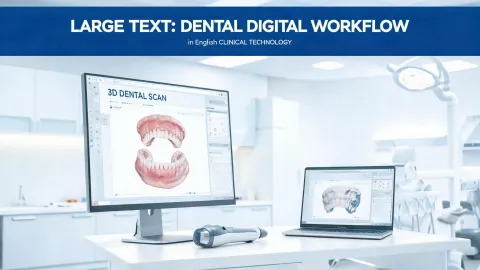
Digital implant work has changed the way we review parts. A scan body is not a static component; it creates the virtual position for the restoration. If you are scanning a Straumann implant, the Straumann CARES Scan Body is the reference geometry designed for that workflow. I have mixed feelings about generic scan bodies. Some labs evaluate them carefully and get good results; others choose them because they are cheap.
In a quality review, cheap is not a spec. Ask any scan body supplier for fit-precision data, lot consistency, recommended torque, cleanability, and wear limits. If the answer contains only a price, you are not ready to scan.
I still kick myself over a 2023 case that required a second scan appointment. The scan body looked fine in the kit. Under magnification, the anti-rotation feature had a small nick from being cleaned too aggressively. That nick moved the scanned position by enough to create an impression problem. The moral is simple: inspect scan bodies the way you inspect abutments. If a Straumann CARES Scan Body is damaged, replace it.
Branch 3: Dental compressor — an infrastructure decision with a total-cost problem
The phrase dental compressor belongs in a different branch. This is an infrastructure purchase, not a clinical part. It supplies air to handpieces, syringes, and other equipment. A bad compressor can contaminate air with oil or water vapor and make expensive instruments unusable.
For a solo practice with one or two chairs, a compact oil-free compressor with good filtration may be enough. For a larger clinic or a practice doing implant surgery, a centralized system with drying and service access usually makes more sense. I'm not going to give exact sizing rules because local climate, chair count, and equipment load all affect the choice. I will say the cheapest quote is rarely the cheapest compressor when you include installation, moisture control, maintenance, and downtime.
In an earlier role, I saw a clinic save money on a compressor, then replace a set of handpieces after moisture damage. The emergency repair cost more than a proper system would have. That is the whole TCO argument in one unfortunate sentence.
What is a dental sealant? A clinical question in a procurement list
Let me use this term exactly because it is often placed in supply budgets. A dental sealant is a preventive resin-based or glass-ionomer material placed in pits and fissures of posterior teeth. It creates a physical barrier that reduces the chance of occlusal caries. Most people know it as a children's preventive treatment, but adults may have sealed teeth when clinically appropriate.
I'm not a dentist, so I can't give clinical guidelines. Here is what I can tell you from a compliance perspective: the question what is a dental sealant should be answered by a clinician before procurement enters. Material selection, isolation technique, and patient selection are clinical decisions. Purchasing can verify lot numbers, expiry dates, and storage conditions, but it should not pick a formulation to save money.
The boundary case: ostomy supplies don't fit a dental checklist
Now for the part of this list that looks out of place: ostomy supplies. If you work for a large medical distribution group or a combined practice, you might see ostomy supplies on the same purchase order as dental items. That does not mean they belong in the same decision tree.
Ostomy products are used by people with an abdominal stoma. They include skin barriers, pouching systems, flanges, and accessories. Those products need different validation, different clinical owners, and different supplier audits. I've reviewed dental components for years, but I don't have the clinical expertise to evaluate ostomy supplies. When you cross into an unfamiliar category, saying so is not a weakness; it's a quality control step.
How to tell which branch you are in
Use these quick branching questions.
If you're choosing an implant restorative component, ask about connection, clinical plan, component code, traceability, and remake support. The Straumann TiBase is only one piece of a larger system.
If you're choosing a digital scan aid, ask about scanner compatibility, reference library, lot consistency, and wear limits. The Straumann CARES Scan Body is designed for Straumann restorative workflows, but it still must be inspected before every use.
If you're choosing equipment like a dental compressor, calculate ten-year total cost, not the sticker price.
If you're answering the patient or staff question what is a dental sealant, keep the clinical decision with the clinical team.
If you're looking at ostomy supplies, bring in an appropriate specialist and do not transplant a dental QA template.
This guidance was accurate as of early 2025. Straumann catalogs and digital workflows evolve, so verify current codes and compatibility before ordering. The branch of the decision may change, but the discipline doesn't.