Guided Surgery Sprint
Validate case intake, CBCT merge, guide design review, drill sequence, and day-of-surgery kit readiness with a documented acceptance checklist.
The Straumann Innovation Lab is a pilot environment for dental groups, laboratories, educators, and specialist clinics that want to pressure-test connected implant dentistry with realistic clinical constraints.
Book a Lab Tour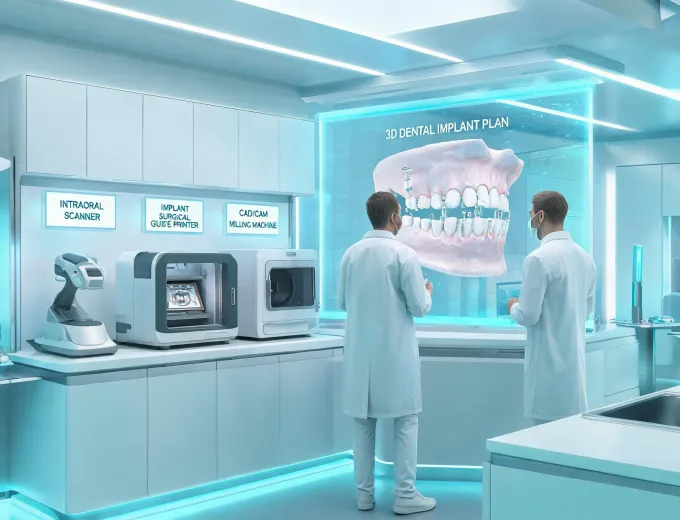
Validate case intake, CBCT merge, guide design review, drill sequence, and day-of-surgery kit readiness with a documented acceptance checklist.
Evaluate intraoral scan capture, margin clarity, implant scan body selection, and lab communication across real practice roles.
Connect digital analog selection, CAD library governance, milling strategy, and final restoration approval into a repeatable handoff.
Review access control, data retention, GDPR-ready processing terms, and secure file transfer for multi-site dental organizations.
Define indication, provider role, restorative objective, and documentation requirements before any hardware discussion.
Confirm implant, scan body, analog, Ti base, software library, and milling material fit for the desired workflow.
Build launch checklists for clinicians, assistants, laboratory technicians, procurement, and compliance stakeholders.
Pilot conversations rarely fail on technical curiosity. They slow when clinical, restorative, and operations leaders disagree on which workflow direction the practice will commit to. The notes below frame the live debate so the choice is documented, not left to assumption.
Immediate loading case: Reduces patient time to function, supports anterior aesthetic cases, and aligns well with full-arch and All-on-X protocols when primary stability and bone quality permit.
Delayed loading case: Greater predictability in compromised bone, smoking patients, or bruxism cases; allows osseointegration before functional load and lowers early failure exposure documented in long-term registries.
Straumann surgical kits, BLX/TLX implant lines, and prosthetic libraries support both protocols. Selection should reflect bone quality, ISQ measurements, occlusal load, and the clinician's documented case history rather than a default rule.
Chairside case: Same-day provisional or final restoration shortens patient journey, supports single-visit workflows, and keeps the case file inside the practice. Best for high-volume single-unit and small-span work.
Lab case: Wider material range (high-translucency zirconia, layered porcelain, full-cast metal), specialist technician craftsmanship, and consistent quality for complex full-arch or aesthetic anterior cases.
Most successful DSO and specialty practices run a hybrid: chairside for routine restorations, lab for full-arch and aesthetic cases. Straumann scan body and digital analog libraries are designed to feed either path so the practice does not lock in one workflow prematurely.
Honest scope notes help practices avoid over-deploying digital tooling. Examples documented in pilot reviews include:
Share the workflow you want to improve, whether it starts with an edentulous consultation, a failing tooth extraction plan, or a DSO-wide scanner launch.