-
The counterintuitive part: the implant is rarely the weakest link
-
What a Straumann implant price does and doesn't include
-
The Straumann surgical guide: an add-on that usually pays for itself
- Same thinking, other equipment: biosafety cabinets, ultrasound machines, and laser surgery
-
Where the total-cost argument has limits
Straumann dental implants cost more per unit than a lot of implant systems on the market. If that sentence is where your evaluation ends, though, you're comparing the wrong number. I'm a quality/compliance manager at a dental implant manufacturer. I review implant bodies, abutments, TiBase components, surgical kits, and guided surgery products before they get released to customers—a few hundred unique SKUs per year (which, honestly, is more of a grind than it sounds). Looking across distributor invoices and completed case costs, the implant body typically accounts for less than one-third of the total cost of a restored case. The other two-thirds sit in components, planning, chair time, sterilization, and the occasional redo.
So if you ask me, “How much does Straumann cost?” is the wrong opening question. The useful question is: are the other 70% of your expenses getting the same quality thinking? Because a well-made implant placed through a sloppy workflow is a bad investment at any price.
The counterintuitive part: the implant is rarely the weakest link
In the rejection logs and material reviews I work through, the pattern that keeps showing up isn't the one you'd expect. The implant itself is the most controlled part of the workflow—and it should be, because that's the part going into bone. The issues cluster around smaller things: an abutment hex that doesn't seat cleanly, a TiBase with a slightly off contour, a healing abutment that's close enough, a surgical guide that doesn't sit perfectly on the adjacent tooth.
Back in Q1 2024, we received a batch of abutments with an internal hex engagement 0.011 mm off nominal. The supplier called it within industry tolerance. On paper? Yes. On our gauges, the connection was visibly sloppy—you could feel the play when you seated it on the implant. We rejected the batch. The supplier reworked it at their cost, and every contract since then includes hex engagement in the dimensional report. To put a number on it: my team rejected about 4% of supplier first deliveries in 2024. Most were correctable. None shipped.
That kind of check is part of what makes a premium implant system premium—and it only works if you apply it to the whole set of components, not just the headline implant. A quality system under ISO 13485 doesn't happen by accident. It costs money. It also saves money, but only if you measure the total cost of the case rather than the unit price of the implant.
What a Straumann implant price does and doesn't include
Straumann's catalog isn't a single product. A Straumann implant quote depends on the line (Standard Plus, Bone Level Tapered, and others), the surface treatment, length, diameter, and the volume discount the distributor offers. The SLActive version of a given implant costs more than the SLA version because of an additional manufacturing step and a documented clinical rationale: the hydrophilic surface is designed to speed up early bone response. Whether that difference is worth it for your patient mix is a case-by-case decision—it shouldn't be made on price alone.
A more useful way to compare systems is to use full case costs, not implant list price. On an invoice for a single implant restoration, I generally see:
- Implant body (SLA or SLActive; specific diameter and length)
- Cover screw or healing abutment
- Restorative connection (TiBase, abutment, or both)
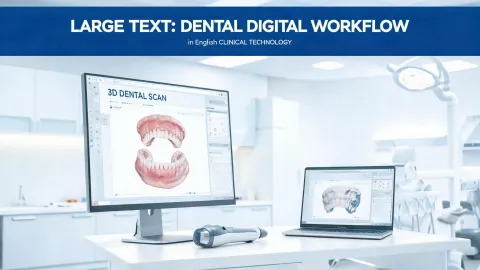
- A Straumann surgical guide, if the placement was digitally planned
- Amortized kit pieces, drills, and disposables
The implant itself is one of the few line items on that page with a transparent price. The others are where the surprises happen. If you're only comparing the first bullet point, you're making a purchasing decision with about a third of the data.
The Straumann surgical guide: an add-on that usually pays for itself
A Straumann surgical guide is one of those line items buyers question because it shows up as a visible, per-case cost. From a quality point of view, it's also one of the better investments in the whole workflow. A guide transfers the planned position to the surgical field—angle, depth, and entry point. Freehand placement, no matter how experienced the surgeon, introduces more variability. That variability is usually manageable. But a compromised case can cost more in revision time and components than a whole set of guides.
I'm not saying guides eliminate error. They shift error upstream, where it's visible and correctable before surgery. In my inspections, I look at sleeve position tolerance, wall thickness, material compatibility with sterilization, and fit on the model. Those details don't show up in a product photo. They show up in whether the guide works as intended on the day.
Same thinking, other equipment: biosafety cabinets, ultrasound machines, and laser surgery
Once you start looking at total cost, it spreads to other purchases in the practice (quality people generalize everything into risk; sorry). Here are three examples where the same trap shows up.
Biosafety cabinet
If the practice or lab processes graft materials or biological products, the biosafety cabinet is part of surgical safety, not an accessory. The missing information in most quotes is operational cost: filter replacement, annual certification, airflow calibration, and local service availability. I've been in clinics where the economical cabinet sat unused because nobody could service it locally. A cabinet that isn't certified is just a very expensive metal box.
Ultrasound machine
For a clinic adding an ultrasound machine, the temptation is to compare probe count and image quality only. That's the equivalent of comparing implant list prices. The costs that determine five-year total ownership are replacement probe cost, service turnaround, software updates, operator training, and whether the unit is still supported in year five. In the service agreements I've reviewed, probe replacement can run close to a third of the purchase price. Ask about that before you buy.
Laser surgery: what it is and what it costs in practice
A patient might ask: what is laser surgery? Does it hurt? Is it better than a scalpel? In a dental context, a surgical laser uses focused light energy to cut and coagulate soft tissue, often with less bleeding and faster healing. For the practice, a laser is a significant purchase. The common mistake is choosing by price and power alone. Wavelength matters because it determines which tissues the device can treat. Tip and consumable costs matter. Training matters even more. A laser sitting in a drawer because nobody was trained to use it is more expensive than a slightly pricier unit that gets used daily.
Where the total-cost argument has limits
To be fair, total-cost reasoning doesn't automatically lead to the most expensive option. If you run a high-volume clinic placing straightforward single implants with a consistently low complication rate, a more basic system may be the rational business choice. The important part is that you measure outcomes as the real cost metric. Unit price is easy to track. Complication and redo rates are harder—and far more expensive.
A couple of limitations from my side. I'm speaking from the manufacturing and quality side, not the clinical side. Surgical skill, case selection, and patient factors will always matter more than the difference between two good implant systems. Also, prices and product programs change quickly. This reflects the audits and quotes I reviewed in early 2025—check with your local Straumann representative for current pricing and support. And if you're buying outside regulated markets, your quality oversight requirements may differ, which changes the calculation too.
Or, to put it in the language I use with my own team: the most expensive component is rarely the one carrying the most risk. So audit the threads you can't see, the fit you can feel, and the guide you plan to cut through. That's where the real cost of an implant decision lives.