-
Why I Get Paid to Look at Margins, Not Marketing
-
The First Difference: What the Case Actually Needs
-
Fit, Margins, and the Scanner Elephant in the Room
-
Aesthetics vs. Strength: The Trade-Off Isn't What You Think
-
What I Audit Before I Trust a Material Manufacturer
-
One Extra QC Layer: Implant-Supported Restorations
-
My Bottom Line: What Should You Choose?
Why I Get Paid to Look at Margins, Not Marketing
I'm the quality manager at a midsize dental lab. Every case that goes out—especially every zirconia bridge and lithium disilicate crown—lands on my bench first. I review about 2,400 ceramic units a year, and in 2024 I rejected 6.4% of first deliveries. That might sound harsh, but the dentist down the street doesn't call to blame the ceramic block. He calls to blame us.
So when people ask me 'zirconia vs lithium disilicate?' I cringe a little. It's not a simple material comparison. It's a clinical-case comparison, workflow comparison, and vendor-trust comparison all rolled into one. Let's walk through what I actually evaluate.
The First Difference: What the Case Actually Needs
A zirconia bridge is designed for a missing-tooth span. A lithium disilicate crown is designed for a single tooth. That sounds obvious, but you'd be surprised how many times a proposal treats them like interchangeable products.
For a posterior bridge with two or more missing teeth, zirconia is my default start point. It has the flexural strength and connector geometry to handle molars. For a single anterior crown with high esthetic demands, lithium disilicate is usually the cleaner choice because it offers more translucency without a metal substructure.
Can you do a 3-unit anterior bridge in lithium disilicate? In well-selected cases, yes. But I won't push it into a long-span posterior situation just because someone wants a metal-free alternative. The framework design and connector dimensions are different. One weak connector on a zirconia bridge is a fracture waiting to happen; forcing lithium disilicate into a case where there isn't enough ceramic thickness is a red flag before we mill anything.
Fit, Margins, and the Scanner Elephant in the Room
The biggest quality issue I see isn't material strength. It's fit. Last year, 38% of our rejects came back because marginal fit wasn't good enough to ship. In most of those cases, the material wasn't the problem. The digital workflow was.
Here's the part that surprises people: a top-end zirconia bridge with a 100-micron marginal gap is worse than a decent lithium disilicate crown with a perfect margin. You can't glue your way out of a poor-fitting bridge.
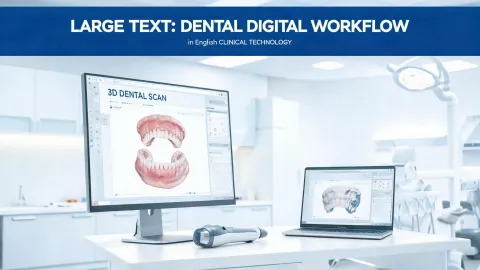
If your 3d shape dental scanner is out of calibration, the zirconia vs lithium disilicate debate is moot. We found this the hard way in 2023 after someone dropped one of our scan heads. The scans looked fine in the software, but a pattern of ill-fitting copings started showing up. The most frustrating part: the system didn't flag itself. You'd think a modern scanner would, but it doesn't always.
Once I set up a weekly calibration check with a known reference model, the number of marginal misfits dropped by about 22% in Q1 2024. There's something satisfying about a quiet QC win like that. No dentist sees the calibration log, but they feel it in the chair.
For zirconia, sintering shrinkage is the other wildcard. A partially sintered zirconia bridge shrinks during firing, so the CAD software has to compensate. If the block manufacturer doesn't keep density consistent, that compensation fails. Lithium disilicate goes through a crystallization process with less dimension change, but that doesn't mean the milled crown automatically fits. It still depends on a good scan, good design, and good milling.
Aesthetics vs. Strength: The Trade-Off Isn't What You Think
The plain-vanilla comparison is true: zirconia is strong and more opaque; lithium disilicate is more translucent and less strong. But on my bench, the real difference is how each material behaves under pressure.
A lithium disilicate crown can be adjusted with careful polishing, and it can look invisible in the mouth. But because it's translucent, the color of the cement and the underlying tooth can bleed through. If the prep is badly discolored, that crown might pick up a gray tint. Zirconia is more opaque—sometimes too opaque. A monolithic zirconia crown can look flat or milky when you're trying to match a translucent anterior tooth.
I've also learned to watch the process around the material. We've had lithium disilicate crowns fail because the clinician didn't bond them properly. We've had veneered zirconia bridges chip because the framework was poorly designed or the porcelain was layered too thick. Blame the process, not the chemistry.
What I Audit Before I Trust a Material Manufacturer
Here's where the quality perception angle gets real. When someone searches for a dental crown material zirconia manufacturer, they probably compare price and flexural strength. I compare batch documentation and shade stability.
In 2022, I approved a trial batch from a budget dental crown material zirconia manufacturer our procurement team found online. We saved around $35 a block. Then one framework fractured in the furnace, two chipped during delivery, and one came back from the dentist with a shade mismatch. By the time we remade those cases and covered extra shipping and lab hours, we'd spent close to $4,000. That was a textbook penny-wise, pound-foolish moment—and it changed how we buy dental laboratory materials.
Now when a manufacturer wants to earn our business, I ask five questions:
- Can you provide batch traceability for every block or puck?
- Do you publish ISO 6872 classification and flexural strength data?
- Are your sintering and crystallization parameters consistent from lot to lot?
- Does your shade system match before firing?
- What's your clinical history, not just your brochure?
I ask the same things for lithium disilicate dental materials. Whether it's a zirconia bridge or a lithium disilicate crown, the material is only as good as the documentation behind it.
One Extra QC Layer: Implant-Supported Restorations
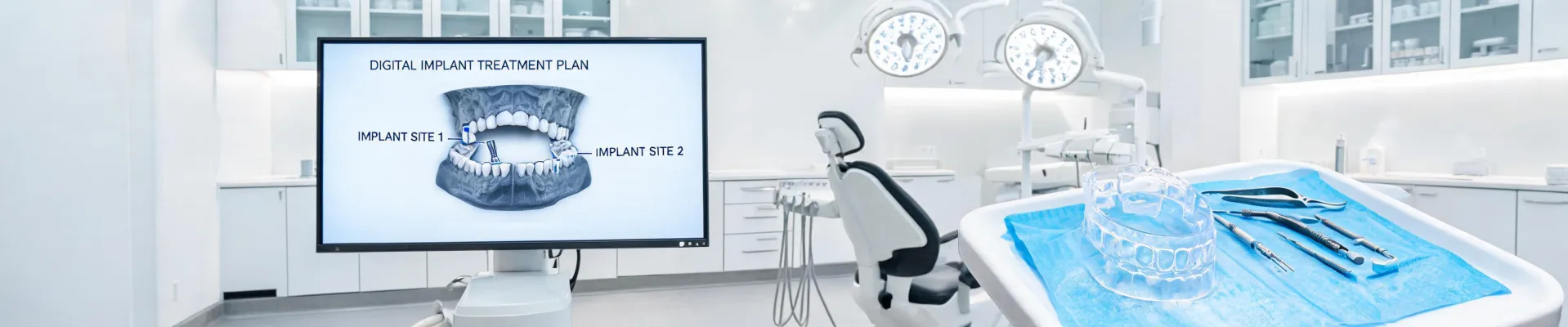
When a restoration goes on an implant, I add another variable: component tolerances. If we're delivering a zirconia bridge or lithium disilicate crown over a Straumann implant, I want an original Straumann TiBase, not a generic compatible part. I can't inspect internal connection tolerances with a loupe, and I don't want to guess. Original manufacturer components give our QC records a known baseline.
My Bottom Line: What Should You Choose?
If you're looking for one material to rule them all, stop. Choose based on the case:
- Single anterior crown with healthy tooth structure and controlled bonding? Lithium disilicate crown is usually the safer esthetic bet.
- Multi-unit posterior bridge or implant-supported bridge? Zirconia bridge is typically my first choice.
- Limited occlusal clearance? Zirconia can often work in thinner sections, but check the manufacturer's minimum thickness guidance first.
- Deeply discolored prep under a very translucent crown? I'd lean zirconia or a layered approach, not bare lithium disilicate.
And don't forget the work behind the restoration. A 3d shape dental scanner isn't an accessory; it's part of the quality chain. If the lab doesn't calibrate its scanners or verify materials, the material on the invoice doesn't mean much.
People do business with labs that make them look good. That's the real bottom line. When a dentist opens a case from our lab, it carries our reputation—and I'm not going to risk that to save $35 a puck.