It Depends. That's Not a Cop-Out.
I'm the office administrator for a 40-person dental and medical group. I manage all dental implant and surgical supply ordering—roughly $1.1 million a year across 8 vendors, and I report to both operations and finance. When I took over purchasing in 2020, I thought the hardest part would be finding one supplier that could handle everything: implants, surgical kits, loupes, maybe even imaging. It didn't take long to learn otherwise. A vendor who couldn't provide proper invoicing cost us $2,400 in rejected expenses before I understood the game.
So I'll be straight with you: there is no universal answer to 'what should I buy?' The right decision depends on who's using the device, in what setting, and how well you can verify the vendor's claims. Here are the scenarios I see most often:
- A practice adding or expanding implant dentistry—Straumann implants, the Straumann Digital Library, and Straumann milling cutters.
- A clinician asking for better vision and posture at the chair—dental loupes.
- A facility exploring diagnostic imaging—what is medical ultrasound and whether the purchase actually fits the workflow.
Scenario A: Expanding Implant Dentistry
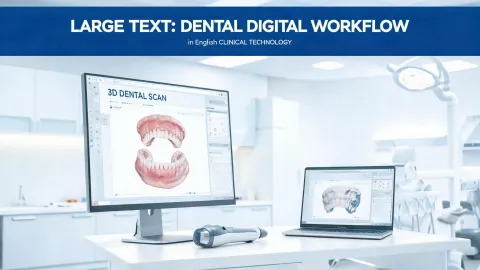
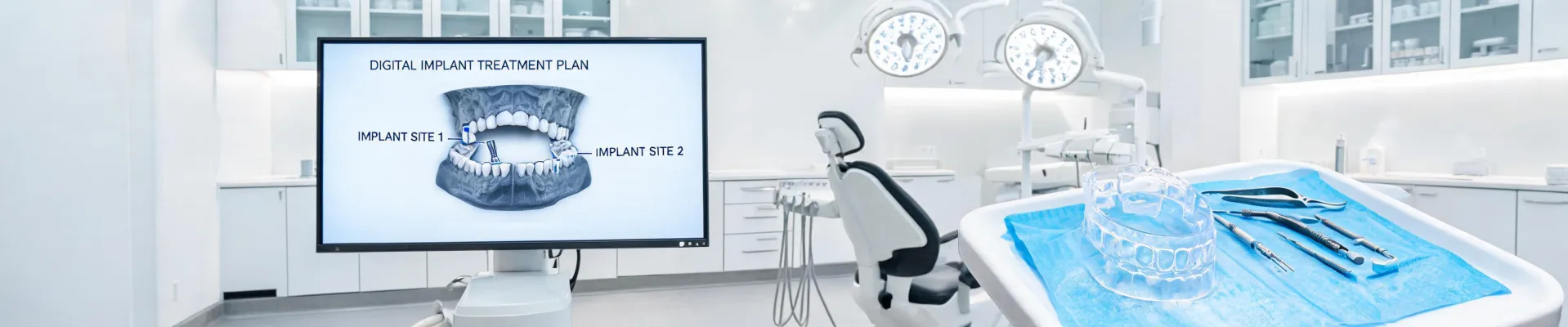
If a dentist says they want to start restoring implants with Straumann, my first question isn't which implant. It's whether the lab or in-house mill has the right digital files. This is where the Straumann Digital Library comes in. It contains the prosthetic connection files—implant geometry, abutment interfaces, collar trims—that make the restoration actually seat on the implant.
We learned that the hard way. In 2023, a lab sent us a crown designed from a generic library instead of the Straumann Digital Library. The fit was off by maybe half a millimeter. The dentist kept saying 'it's close.' Close is not a seat. That appointment got rescheduled, the patient was annoyed, and I had to explain why a 'minor discrepancy' wasn't minor. That was the trigger event that changed how I think about compatibility.
If you mill in-house, add Straumann milling cutters to the conversation. A Straumann milling cutter is designed to match the material and restoration type you're machining—titanium abutments, provisional crowns, those kinds of jobs. There are cheaper cutter systems out there. We tried one once because it looked like a smart way to save. It wasn't. The surface finish was inconsistent and we re-milled the same crown twice. That's a ton of rework for a $200 gamble. The upside was a little savings; the risk was a crown that didn't fit and a clinician who lost confidence in the workflow.
Here's the thing: 'compatible' means someone has to document it. Per FTC advertising guidelines (ftc.gov), claims should be truthful, not misleading, and backed by evidence. If a vendor won't put the compatibility in writing, that's a deal-breaker for me.
Scenario B: Buying Dental Loupes
Dental loupes are a different animal. The right loupe depends on the person's eyes, posture, working distance, and what procedures they do. What works for an oral surgeon doing long cases might be overkill for a hygienist doing cleanings. Honestly, I can't tell you the perfect magnification for every clinician. My experience is based on about 60 loupe orders over the last few years. If you're in a clinic with very different working distances, your experience might differ.
The one rule I do trust: measure the working distance before choosing magnification. I only believe this after ignoring it once. In 2021, I ordered 3.5x loupes for a dentist who sits about 45 centimeters from the mouth. He ended up leaning forward, straining, and asking why the frame kept slipping. We reordered with the correct working distance, and suddenly the problem vanished. Simple.
Also plan for a light. Some clinicians try to skip it to keep the budget down. For most procedures, a light isn't a luxury; it's a no-brainer. Without it, you end up chasing shadows and hunched over. A dental loupe without a light is a magnifier you'll use half the time.
Scenario C: When a Clinician Asks About Medical Ultrasound
Let's define the term first. What is medical ultrasound? It's a non-invasive imaging method that uses high-frequency sound waves to produce real-time images of soft tissue. It's used for guided injections, thyroid checks, vascular access, and a lot of other applications. But it's not a simple box to check on a purchase order.
Ultrasound machines come in different configurations—portable, handheld, cart-based—and the transducer matters more than the logo on the screen. A linear probe for vascular access is not the same as a curved array for abdominal scanning. If the vendor can't tell you which probe configuration you need, they're not selling you an ultrasound machine; they're selling you a problem.
I once had a supplier say, 'This isn't our strength. Here's who does it better.' That vendor earned my trust for everything else. I'd rather work with a specialist who knows their limits than a generalist who overpromises. Boundaries are a feature, not a flaw.
The Boundary Case: Heart Valve Replacement
Every so often, someone asks why we don't just buy 'everything' from one vendor. This is where I stop. Heart valve replacement is not a typical procurement line item. It's a surgical procedure in a hospital setting with regulatory oversight, specialized supply chains, and clinical judgment I don't have. I don't have hard data on hospital valve purchasing; my sense is that it's a system-level decision, not a buyer negotiation.
If a vendor says they can handle dental implants, loupes, ultrasound, and heart valve replacement in one package, that's a huge red flag. Run. The 'we do everything' line usually means 'we do a lot of things okay.' For a medical device, okay isn't good enough. Don't buy a valve because the same rep sold you a milling cutter.
How to Tell Which Scenario You're In
Start with the clinical problem, not the vendor. Three questions can help:
- Is the issue about restoring teeth? Focus on implants, the Straumann Digital Library, and milling cutters.
- Is the issue about the clinician's eyes, neck, or posture? Focus on dental loupes and working distance.
- Is the issue about seeing soft tissue in real time? Focus on medical ultrasound, and get your imaging specialist involved early.
If the problem is heart valve replacement, stop and find the hospital procurement team. That's not an administrator decision, and it's not a Straumann catalog question.
Bottom line: no vendor is the best at everything. The vendor who says 'this isn't my lane—here's a specialist' is the one I trust to stay in their lane. That's how I keep $1.1M in annual ordering from becoming a series of expensive surprises.