Three Scenarios, One Question: Which Implant System Do You Actually Need?
Look, I get a fair number of calls from new clinic owners who've spent hours on the Straumann portal, staring at the price list for a Straumann dental implant, and wondering if they're about to make a terrible financial decision. It's easy to get lost. Every vendor's catalog seems to claim they're the gold standard. But here's the thing: the best system for one clinic can be a total money pit for another. It basically comes down to what you're planning to do.
Let me break this down into the three main situations I see, based on my own mistakes rehabbing a few failed cases over the years.
Scenario A: The High-Volume, High-Predictability Clinic
The profile: You're doing multiple single-unit cases a day. The anatomy is mostly straightforward. Your assistant is experienced. You need a system that works every single time with no surprises, and you can absorb a higher upfront cost because your volume is high.
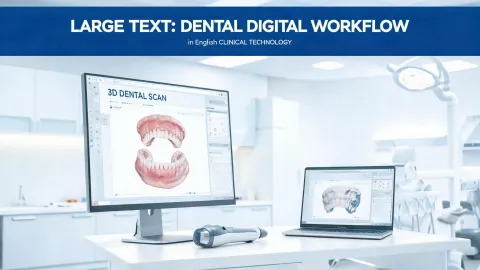
People assume that for this kind of clinic, Straumann is the only choice. The reality is their ecosystem is incredibly deep, but you can also overpay for reliability. If you go Straumann, stick to the core portfolio: the BLX or Standard Plus implants. The pricing here is competitive if you're buying in volume. But the real value for a high-volume clinic isn't the implant itself—it's the digital workflow. The Straumann Cares digital workflow for guided surgery can turn a 10-minute surgery into a 7-minute one. That time savings adds up to a ton of revenue over a year.
The silent killer in this scenario is ordering the wrong components. I once ordered 50 ti bases for a case that needed a different prosthetic platform. Checked it myself, approved it, processed it. We caught the error when the lab called asking why the scan body didn't fit. $890 in wasted parts, plus a 1-week delay. The lesson is: do not trust the Straumann scanning portal's auto-populate without double-checking the final tag. Use their surgical manual, and for the love of everything, order your screws with the implant, not separately.
Scenario B: The Boutique Clinic Focused on Aesthetics
The profile: You do fewer cases, but they are more complex—think anterior zone grafting, immediate placement, or full-arch rehabilitations. Your margin per case is higher, and you need a system that offers the best possible aesthetics and predictability for challenging bone.
Here's where the Straumann pricing starts to make a different kind of sense. The Straumann Pro Arch treatment concept is a whole workflow. You're not just buying an implant; you're buying the surgical protocol, the specific prosthetic components, and the screw-retained bridge. The upfront cost for a full-arch case with Straumann is significant, but the risk of component failure or a poor emergence profile is a risk you are willing to pay heavily to avoid.
But don't fall into the trap of assuming all Straumann products are equal. For this scenario, the BLX implant in the Active or TE (Tissue Level) platforms are your friends. The surface is super responsive. The question isn't 'Is Straumann good?' It's 'Which Straumann implant for which site?' Using a Standard Plus in a extraction socket that needs a jump-start is asking for trouble, frankly.
Also, a note on the surgical motor. For this work, you absolutely need a motor with a high-resolution torque control. An ultrasonic surgical aspirator is nice for periotomes and delicate work, but for osteotomy, the surgical motor's precision is paramount. The Straumann surgical motor is excellent, but I've seen many cheaper options that lie about their torque. The difference between 20 Ncm and 35 Ncm can be the difference between a stable primary implant and a wobbly one.
Scenario C: The Cost-Conscious New Practice
The profile: You're starting out. Your case volume is low. You need to keep your initial investment down, but you don't want to compromise on clinical outcomes to the point where you're redoing cases in a year.
This is where the 'Cheapest Straumann Dental Implant' search comes from. And the honest answer is: you probably shouldn't buy Straumann for your first 50 cases if you can avoid it. The Straumann price per implant is a floor, not a cost. The real cost is the inventory you need to carry—the specific drivers, the specific screwdrivers, the specific healing abutments, the specific scan bodies, the specific restorative components. That inventory investment for a full Straumann portfolio is thousands of dollars you might not have.
Look, I'm not saying budget options are always bad. I'm saying they're riskier. A cheaper implant system might have worse surface treatment, leading to lower osseointegration. Or it might have a less proven prosthetic connection, leading to screw loosening. The 'economical' brand is often cheaper because it uses a less expensive manufacturing process. That can be a gamble.
My advice for a new practice is to pick one lower-cost but clinically proven system (like Zimmer Biomet or a well-reviewed Korean brand like Dentium) and master it. The chaos of stocking three incomplete systems is a recipe for disaster. Later, when you have the budget and the volume, you can add a premium system like Straumann for the complex cases.
Here's a specific mistake I made in my first year (2017): I bought a surgical light and an ultrasonic surgical aspirator from the same no-name vendor because they offered a 'clinic package' discount. The light worked fine. The aspirator died in month 11. The warranty was a joke. I learned the hard way that 'cheaper' for equipment like a surgical light is one thing—it's a passive device. A motor or an aspirator is an active device with a lot of moving parts. You want reliability there. Spend the money on the tools that do the cutting or the ultrasonic work.
How to Figure Out Which Scenario You Fit Into
So, how do you know if you're a Scenario A, B, or C? Here's my sloppy but effective mental checklist:
Your case volume is the biggest clue.
If you do 15+ implants a month, you're likely a Scenario A. If you do 2-5 complex ones, you're a B. If you're averaging 1-2 single-unit cases, you're a C. Don't lie to yourself. If you're doing 10 cases a year, you're not a high-volume clinic. You're a boutique clinic that needs to be smart about cost.
Your average case fee tells the next story.
If your average case fee is under $3,000, you're probably in Scenario C. If it's $5,000-$8,000, you're likely B. If it's over $10,000, you're definitely in A or B. The cost of the implant system should be proportional to the fee you can charge. You can't pay a Rolls-Royce premium if you're charging Toyota prices.
Are you doing guided surgery?
If the answer is yes, the Straumann Cares software and scan body workflow is a massive advantage. If the answer is no, the value proposition for Straumann weakens significantly, and you can absolutely use a cheaper system with a manual surgical kit. The guided surgery workflow is what makes the 'speed' and 'predictability' of Straumann worth its higher price. Without it, you're paying for a Ferrari engine but driving it on local roads at 25 mph.
Real talk: The Straumann catalog is overwhelming. Their website is a labyrinth. The login for the shop.shopstraumann.com portal (or whatever the current URL is) is a pain. It doesn't make you feel dumb to admit you can't find the specific screw you need. I still regularly spend 20 minutes searching for a part number I've ordered a dozen times before. The point isn't that Straumann is easy to work with. The point is that for the right case, the clinical trust is worth the headache.
Don't pick your implant system based on the price of the cheapest implant in the catalog. Pick it based on the total cost of carrying the inventory and the level of clinical support you actually need. And for the love of all things, don't buy a surgical aspirator just because the light came in the same box. That way lies $450 of wasted budget and a really awkward conversation with your accountant.