-
Everyone asks about the implant. Nobody asks about the workflow.
-
The Straumann store became our inventory safety net
-
Your dental compressor will pick the worst day to fail
-
Teaching patients the science (yes, even PCR) is part of the workflow
-
I know what you're going to say
-
Most emergencies are a pattern, not a fluke
Here's an opinion that gets me in trouble at industry events: the implant is the least risky part of your implant workflow.
I'm not being dramatic, and I'm not trying to offend anyone. I'm basing this on eight years of coordinating prosthetics for dental clinics — 200+ rush orders, including same-day turnarounds for implant-supported cases. In all that time, almost none of the emergencies were actually caused by the implant itself. They were caused by gaps in the workflow, gaps in inventory, and equipment nobody remembered to maintain.
That's not bad luck. That's a systems problem. And it's fixable.
Everyone asks about the implant. Nobody asks about the workflow.
Most buyers focus on per-unit implant pricing and completely miss the workflow cost. That's the outsider blindspot I see every single week.
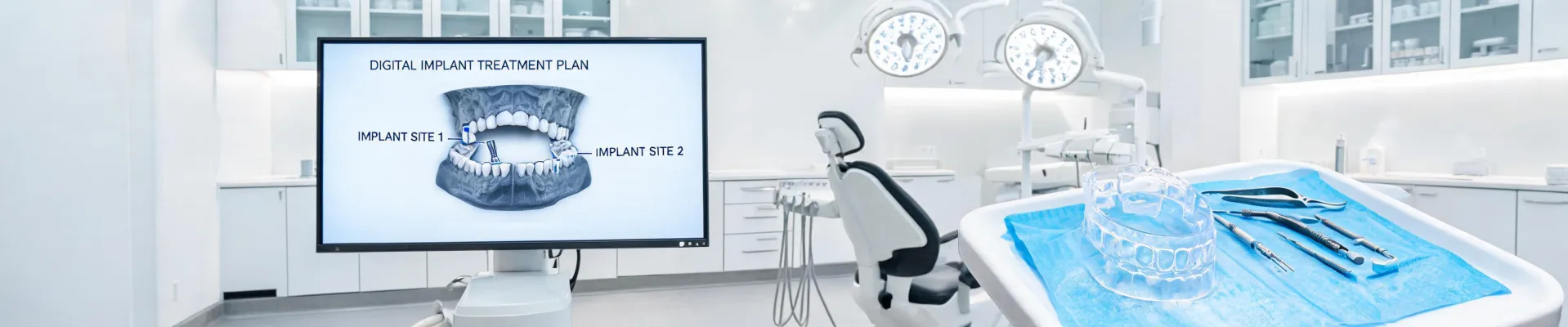
A clinician will ask me: "Which Straumann implant should I use?" It's a fair question — and honestly, with a surface like SLActive, the clinical evidence is remarkable. Published data on SLActive accelerated osseointegration is some of the strongest in implantology. But it's still the wrong first question. The better question is "Can I scan, design, mill, and seat a restoration in the clinical window this patient needs?" That's not an implant question. That's a digital workflow question.
And the practices that answer it well? They're the ones whose emergencies I never get called about.
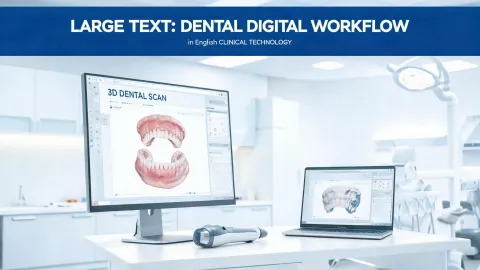
Take intraoral scanners. A decade ago, you could justify treating them as optional. Today, a clinic running a Straumann digital workflow — scanning the arch, planning guided surgery, sending prosthetic files directly to the mill or lab — doesn't just deliver better aesthetics. They respond to emergencies faster. In March 2024, a client called at 8:20 AM. Crown debonded on a BLT implant, patient flying overseas at 6 PM for a six-month assignment. Because they had the original digital scan in the system, we had a new crown designed and sintering by 11 AM. That same-day turnaround would have been physically impossible with physical impressions.
Digital isn't about being fancy. It's about being fast when it counts.
The Straumann store became our inventory safety net
Okay, confession time. We didn't have a formal inventory verification process for implant components. Cost us exactly once — which was once too many.
Here's what happened. Mid-case on a Straumann Standard Plus implant, the clinician needed a specific titanium abutment. Not in the drawer. Checked the back cabinet. Not there. The sales rep couldn't get one to us in the next 45 minutes. We had to abandon the case. The patient left with a temporary and a delayed restoration, the surgeon's schedule was shot, and we ate the cost of wasted clinical time.
The third time a variation of this happened (different component, same root cause), I finally created a monthly stock verification checklist. Should have done it after the first incident. That's when I started paying real attention to the Straumann store. I used to treat it like a simple ordering portal — search a product, add to cart, checkout. It's actually a supply chain visibility tool. I can check what's in stock, order TiBase abutments and temporary components, and track delivery without calling a rep. For a lab or clinic processing a high volume of cases, that visibility eliminates a whole category of emergencies.
Thirty minutes of stock review per month. Let me count... yeah, it has saved at least four cases this year that would have otherwise been cancellations.
Your dental compressor will pick the worst day to fail
Here's the one nobody thinks about until their chair stops working: the dental compressor.
I knew I should schedule the maintenance on our compressor. Kept putting it off, thought "what are the odds, it's been fine for two years." Well, the odds caught up with me in July 2023. It was 2:30 PM on our busiest day. The compressor died mid-procedure. No air pressure, no handpiece, no work. We paid $480 for an emergency mobile compressor rental and still had to reschedule two patients.
And here's the shameful part: dental compressor maintenance is not mysterious. The ISO standards covering dental equipment (ISO 7494 includes requirements for the dental unit's compressed air supply) outline predictable maintenance intervals. Filters need checking every 3-6 months. Condensate traps need draining. Oil levels need monthly verification on oil-lubricated units. The manufacturer manual tells you exactly what to do. Most practices just... don't.
A $7,000 compressor can bring a six-figure practice to its knees. I'm not exaggerating. I've now built compressor maintenance into our monthly checklist. Takes 15 minutes. It's boring, and it saves the kind of chaos you don't want to experience once.
Teaching patients the science (yes, even PCR) is part of the workflow
Now the argument that changed how I think about what patient education actually does for a practice.
Patients trust what they understand. That sounds obvious, but in implant dentistry most practices rely entirely on authority — "trust me, this is what we recommend" — instead of doing the slow, slightly uncomfortable work of explaining why.
Take a question I've started hearing more often: "how does PCR work?"
Not the dental question you'd expect, right? But it comes up because of diagnostic testing. PCR — polymerase chain reaction — is the molecular technique behind periodontal pathogen screening. Kary Mullis developed it in 1983, eventually winning the 1993 Nobel Prize in Chemistry. In a dental context, PCR amplifies tiny amounts of bacterial DNA from a plaque sample through repeated heating and cooling cycles, allowing a lab to identify exactly which pathogens are present — including Porphyromonas gingivalis and other bacteria that directly affect implant survival.
Why does this matter clinically? Because untreated periodontal infection is one of the most common reasons for early implant failure. When a patient asks "why are we doing this test?" — and you explain the PCR process in plain language — they don't just understand the test. They understand why the treatment plan exists.
I've seen practices skip this conversation because it feels like wasted chair time. Here's what I've actually observed across 200+ cases: informed patients ask better follow-up questions, show up to maintenance appointments, and make faster decisions when real emergencies happen. That's not feel-good psychology. It's a practical workflow advantage.
I know what you're going to say
"Easy for you to say. We're a small practice. We can't afford all this."
I hear you. And I'm not recommending a million-dollar renovation. I'm recommending:
- An intraoral scanner (or at minimum, a reliable relationship with a lab that has one — the partnership matters more than the hardware)
- A monthly stock verification through your distributor — whether that's the Straumann store or your local rep
- A compressor maintenance calendar — 15 minutes to set up, 15 minutes per month to execute
- A willingness to spend five minutes explaining diagnostic science to a patient
None of those require a Silicon Valley budget. They require a discipline budget.
And yes, I do mean small practices too. The small practice that can't afford a scanner also can't afford an emergency redo on a full-arch restoration. Which risk is realer?
Most emergencies are a pattern, not a fluke
Here's my closing position, and I'm not going to soften it: most dental emergencies are the product of predictable, avoidable gaps in workflow, inventory, and maintenance.
When I say predictable, I do not mean "unfortunate." I mean mechanically, procedurally, boringly predictable. The same failures repeat across clinics of every size. And the good news embedded in that pattern is that you can fix it with a checklist, a calendar, and a conversation.
Spend more time on the boring stuff. The scanner. The inventory list. The compressor. The five-minute patient education moment. The implant itself was never your biggest risk. The system around it is.
And if you still think I'm overstating it? Call me when your compressor dies at 2:30 PM on the busiest day of the year. I'll bring the checklist. (And a mobile compressor. Learned that lesson. Ugh.)