I'm done pretending all implant brands are basically the same.
I manage purchasing for a 25-person dental practice. I don't place the implants, but I order everything from the surgical kits to the final crowns. And for the last six years, I've managed relationships with about eight different vendors across surgical supplies, imaging equipment, and office furniture. Annually, we spend roughly $450,000 across those suppliers. So when I say I've seen enough to have a strong opinion, I mean it.
If you've ever been stuck trying to justify a premium brand like Straumann to a finance director who just sees a price tag, you know the frustration. Their first question is always: Why pay more when the cheaper alternative seems to do the same thing? I used to have a weak answer. Now I don't.
Here's my take: Straumann dental implants are a no-brainer for most growing practices, but the reason isn't the implant itself. It's the ecosystem. That distinction matters—and ignoring it is where I see people make costly mistakes.
My Starting Assumption Was Completely Wrong
When I first took over purchasing in 2020, I assumed all dental implants were commodities. Everything I'd read about implant systems said that osseointegration rates were high across the board, and the biggest factor was surgeon skill. So why pay a premium for Straumann? You're just paying for the name, right?
Wrong. At least, partially wrong. I learned never to assume "same specifications" means identical results across vendors after an incident where a cheaper ti base didn't seat properly with our existing prosthetic workflow. The reprint and chair time cost us way more than the initial savings.
The conventional wisdom is to always get multiple quotes and go with the lowest price for equivalent specs. My experience with hundreds of orders across our 3 locations suggests something different: relationship consistency and workflow integration often beat marginal cost savings on individual components.
Why the Ecosystem Argument is a Game-Changer
Let me break down why I believe the ecosystem—not just the implant—is the real value. Three things changed my mind.
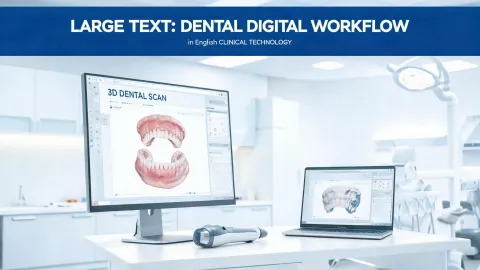
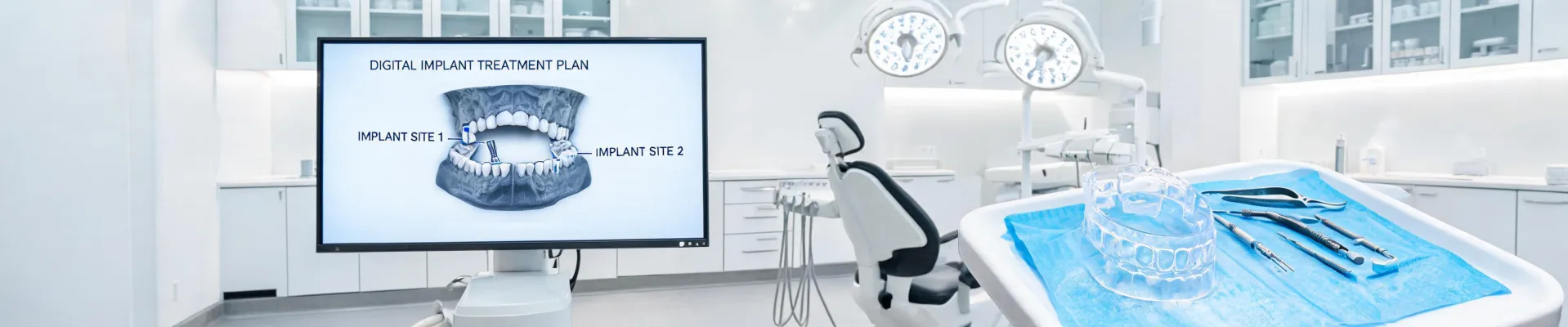
First, digital workflow integration. When we started using guided surgery, the need for seamless compatibility between our surgical planning software, scan bodies, and implant components became critical. With Straumann's digital solutions, everything just worked. No juggling third-party libraries or dealing with mismatched scan body geometries. That saved my team hours of troubleshooting.
Second, surgical kit logistics. We own several full Straumann surgical kits. The organization and part numbering is consistent. When an osteotomy needs a specific drill dimension, it's where the manual says it should be. That might sound basic, but try managing a multi-vendor kit library where every system has a different labeling convention. I've seen it—it's a mess. That unreliable supplier who couldn't provide proper invoicing also had a surgical kit where the drill numbers didn't match the catalog. Cost us a $2,400 write-off after a wrong-size osteotomy prep.
Third—and this is the one people miss—is the consumables pipeline. Straumann's screw, healing abutment, and cover screw inventory management is predictable. Stock-outs are rare. For a practice processing 60-80 implant cases a year, not having to emergency-order a $30 screw while a patient waits is worth real money. The question isn't just the unit price; it's the certainty of supply.
The Price Objection: What I Now Say to Finance
I get why a finance director might push back on Straumann pricing—budgets are real. To be fair, you can get a comparable implant body for less from other reputable manufacturers. But the total cost isn't just the implant cost. It includes:
- Setup and training time: Switching ecosystems costs staff training time and potential mistakes during the learning curve.
- Prosthetic compatibility: Will your lab's components work seamlessly? If not, add lab chair time and remake fees.
- Reorder reliability: How often do you have to substitute components? Each substitution is a potential clinical and administrative headache.
I'll be honest: if I could redo my initial vendor selection, I might not have started with the discount multi-system approach. But given what I knew then—nothing about workflow integration complexities—my choice was reasonable at the time.
Looking back, I should have invested in better specifications upfront. Straumann's clinical trust is a given—it's a well-documented brand. But the workflow efficiency is what's kept us with them. The fact that my surgical team doesn't have to think about compatibility is the real win.
So here's my bottom line: Don't buy Straumann because it's the best implant. Buy it because it's the best system for a practice that's scaling. If you're doing 25 cases a year and planning to grow, the integration and reliability savings will likely outweigh the premium. If you're a solo practitioner doing 10 cases a year with a single lab partner, maybe a simpler ecosystem works fine. There's no universal right answer—but make sure you're comparing total workflow cost, not just unit price.
Take it from someone who's eating reprint costs out of the department budget: the cheapest line item rarely is.