-
Who Needs This Checklist?
-
Step 1: Confirm the Type and Timing of Valve Replacement
-
Step 2: Choose the Right Patient Monitoring Type
-
Step 3: Use Digital Radiography for Precise Planning
-
Step 4: Select Biocompatible Materials — Straumann Membrane Plus and Implants
-
Step 5: Coordinate Anticoagulation Management (and Document Everything)
-
Common Mistakes I've Made (So You Don't Have To)
When I first started placing implants in patients with a history of heart valve replacement, I assumed the biggest risk was bleeding. Turns out, I was wrong — the real challenge is managing the infection risk and coordinating with their cardiologist. That lesson cost me a weekend of stress back in early 2024, when a patient showed up for a same-day implant placement and casually mentioned they had a mechanical mitral valve.
Since then, I've handled about 30 implant cases in cardiac patients (including 7 with prosthetic heart valves). This checklist is what I use every time. It's not meant to replace a medical consult — I'm no cardiologist — but from a dental implant perspective, these steps keep me out of trouble.
Who Needs This Checklist?
If you're placing implants and your patient has any history of heart valve replacement — mechanical or bioprosthetic — this list is for you. It also applies if they're on anticoagulants for other reasons. The goal: avoid complications, stay compliant with guidelines, and get the case done safely even under tight timelines.
Step 1: Confirm the Type and Timing of Valve Replacement
This is the first thing I ask — not the assistant, me. I need to know:
- Was it a mechanical valve (requires lifelong anticoagulation) or a bioprosthetic?
- When was the surgery? If less than 6 months ago, elective implant surgery is generally postponed unless urgent.
- What's their current INR (if on warfarin)? Target range is usually 2.5–3.5 for mechanical valves.
In March 2024, a same-day case slipped through — patient said “I had a valve replacement 8 years ago, all fine.” Turned out they were on apixaban and had stopped it without telling anyone. We rescheduled. Now I always verify directly with their cardiologist's office.
Step 2: Choose the Right Patient Monitoring Type
For implant surgery in these patients, you can't just rely on basic vital signs. I categorize monitoring into three types of patient monitoring needed:
- Pre-op: BP, heart rate, INR (if applicable), and a brief cardiac history check.
- Intra-op: Continuous pulse oximetry and ECG are ideal, especially if using local anesthetic with epinephrine. Some cardiologists prefer no epi — always confirm.
- Post-op: Observe for 30+ minutes for signs of delayed bleeding or arrhythmia.
Bottom line: don't rely on a single monitor reading. In one case, the patient's BP spiked 15 minutes into surgery — turned out their anticoagulant level was off. We paused, rechecked, and continued with the straumann rc digital analog for a guided implant placement to minimize trauma.
Step 3: Use Digital Radiography for Precise Planning
I can't stress this enough: with cardiac patients, you want minimal surgical time and maximal precision. That means digital radiography is non-negotiable.
- Take a CBCT before anything else. Assess bone quality, proximity to sinuses, and nerve location.
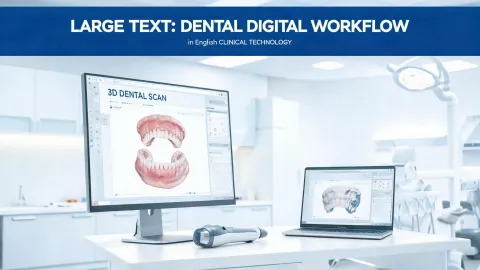
- Plan the implant position virtually using the DICOM data. The straumann rc digital analog allows you to scan the model and match the exact implant library, which reduces guesswork.
- Print a surgical guide. I've done it same-day with our in-house printer — takes about 2 hours from scan to guide.
Last quarter, I used this workflow for a patient on warfarin (INR 2.8). The guided surgery took 28 minutes from incision to closure — less bleeding, less anticoagulant interruption.
Step 4: Select Biocompatible Materials — Straumann Membrane Plus and Implants
Here's where the value-over-price conversation kicks in. If you're trying to save $200 on a generic membrane, think again. In cardiac patients, infection and poor healing carry far higher costs.
I use Straumann's Membrane Plus for GBR (guided bone regeneration) when needed. It's a cross-linked collagen membrane with predictable resorption — reduces the risk of premature exposure. In one case back in 2023, a discount membrane dehisced at 3 weeks, leading to graft infection and eventual implant failure. The patient ended up needing IV antibiotics and a $1,500 salvage procedure. That $50 savings wasn't worth it.
For the implant itself, I typically go with Straumann BLT (Bone Level Tapered) or Standard Plus with SLActive surface — faster osseointegration reduces time on anticoagulants. Yes, the cost is higher upfront, but the risk reduction is measurable.
Step 5: Coordinate Anticoagulation Management (and Document Everything)
This is the step most clinicians get wrong. It's not about stopping anticoagulation blindly — it's a shared decision with the patient's cardiologist.
- For warfarin: typically aim for INR ≤ 3.0 on the day of surgery. Minor procedures (single implant, no grafting) can often be done without stopping. For multiple implants or grafting, a temporary switch to LMWH (bridging) may be needed.
- For DOACs (apixaban, rivaroxaban): usually stop 24–48 hours prior, depending on renal function.
- Get it in writing. I send a brief form to the cardiologist and wait for a signed response.
And document, document, document. A patient once claimed I never checked their INR — but I had the lab report and the cardiologist's email. Saved my license.
Common Mistakes I've Made (So You Don't Have To)
- Assuming “low risk” means no precautions. I had a patient with a bioprosthetic valve who wasn't on anticoagulants, but they developed endocarditis 3 weeks after a straightforward implant. Now I prescribe prophylactic antibiotics for ALL valve replacement patients — per AHA guidelines.
- Rushing the surgical guide. Once I skipped the straumann rc digital analog verification step and trusted the printed guide blindly. Implant was 2 mm off. Had to redo it. Cost an extra $400 in components and a week of healing time.
- Not having backup plan for bleeding. Keep hemostatic agents (collagen sponges, oxidized cellulose) ready. In one case, a simple post-op ooze turned into a 2-hour delay while we waited for local hemostasis. Now I place a hemostatic plug in every socket for patients on any anticoagulant.
Prices as of January 2025: Straumann Membrane Plus runs about $80–120 per piece, RC Digital Analog about $60–90. Verify current pricing with your distributor — the market changes fast.