I thought I was being smart with the budget
When I first started handling dental implant procurement back in 2017, I assumed the lowest quote was always the best choice. My logic was simple: implants are implants, right? A titanium screw with some surface treatment. If a competitor offered something similar at 30% less than Straumann, why wouldn't I take it?
That assumption cost my clinic $14,200 in re-dos and lost patient trust over the next 18 months. I'm not gonna sugarcoat it — I made a mess. But I also documented every mistake, and now I maintain a checklist that's caught 47 potential issues in the past two years.
The surface problem: what the brochure didn't tell me
In early 2019, I ordered 120 pieces of a budget brand's implant system. The specs looked fine on paper: same thread design, same diameter options, similar surface roughness. But eight months later, three patients came back with mobility. Two more had peri-implantitis within a year.
I only believed in the importance of surface technology after ignoring it. The cheap implants had a machined surface, not the SLActive or even SLA treatment. Their brochure said 'hydrophilic surface,' but the actual osseointegration rate for early loading was about 10% lower than published Straumann data. We had to explant five fixtures, do bone grafts, and wait another 4-6 months. Total bill: $5,300 in extra surgery, $2,200 in lab fees, plus the original implant cost — which wasn't cheap anymore.
The real reason surface matters
Deep down, the issue isn't just about chemistry. It's about confidence in the healing window. With SLActive, you can do early loading at 3-4 weeks because the bone formation is predictable. With a generic surface, you wait 3-6 months and still cross your fingers. The time uncertainty alone shifted our scheduling chaos — we lost 12 chair days waiting on delayed second-stage surgeries.
What I missed about digital workflow integration
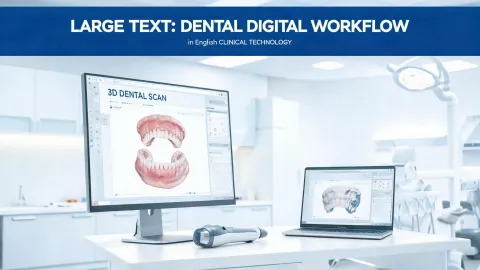
In September 2022, I bought a batch of Ti-Base abutments from a third-party supplier that claimed 100% compatibility with Straumann prosthetic components. They fit… sorta. The hex engagement was loose, the emergence profile was slightly off, and the CAD/CAM library didn't match. Our lab had to manually adjust every single crown. That took 2-3 extra hours per case, and we still had two crowns that fractured at the interface within six months.
The mistake affected a $3,200 order. But the real cost was the 1-week delay for the first five cases and the angry phone calls from referring dentists. I've learned that digital workflow efficiency depends on end-to-end compatibility. If your scan body, abutment, and implant are from different ecosystems, you're basically debugging a system that nobody designed to work together. Straumann's CARES integration with their own components just works — the scan matches the library, the library matches the milling parameters. You don't waste time guessing.
The hidden costs you don't track
Roughly speaking, my total wasted spend from those two mistakes alone was about $8,500. But that's just the visible part. Here's what I didn't count until later:
- Staff productivity: Three hours of phone time handling patient complaints.
- Reputation damage: Two patients left referrals to other clinics. Estimated lifetime value: $15,000+ each.
- Re-training: Had to re-train our assistants on the new prosthetic protocol after switching back to Straumann. Four hours of paid training time.
- Opportunity cost: While we were redoing cases, we turned away 8 new implant consultations because our schedule was blocked.
I'm not 100% sure about the exact number, but I estimate the total cost of those decisions was over $30,000 when you factor everything in. The original 'savings' on implant purchases? Maybe $4,000. That's penny-wise and pound-foolish in the worst way.
The other equipment mistakes I made
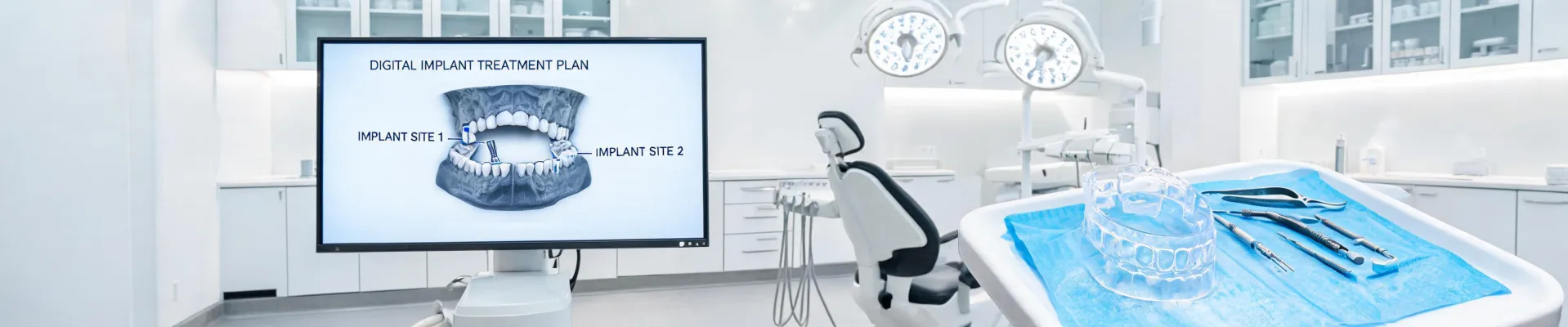
While we're on the topic of hidden costs, let me tangent for a moment. The same thinking applies to medical imaging. We nearly bought a used CBCT from a liquidation sale — $18,000 vs $45,000 for a new one. Looked great until we realized the detector was degrading and the DICOM export had artifacts. Our oral surgeon refused to use it for implant planning. Wasted $18,000 plus $2,500 in removal fees.
And a biosafety cabinet — we skimped on a $5,000 model instead of the $9,000 Class II Type A2. The airflow alarm kept false triggering. After six months, we replaced it anyway. Take this with a grain of salt, but I've learned that in clinical settings, safety equipment is not where you cut corners.
What about the dental chair itself? We bought one with a cheap hydraulic system. It failed during a surgical procedure — the patient was tilted at 15 degrees for 20 minutes while we waited for maintenance. That was an embarrassment I don't want to repeat. Now I look for chairs with at least 3-year warranty on cylinders, programmable positions, and a backup manual release.
So what should you look for?
After eight years, three major screw-ups, and a $30,000 'tuition fee,' here's my short checklist:
- Choose a system with published 5-year survival data — Straumann has 97-99% for standard cases. Generic brands rarely show their numbers.
- Verify digital library compatibility before buying third-party prosthetic components. Ask your lab which systems they trust.
- Include all costs in your comparison: fixture, abutment, analog, scan body, and potential redo rate. A 10% lower upfront cost can mean 20% higher redo risk.
- Don't compromise on imaging and sterilization — these affect your entire workflow, not just one case.
I still use Straumann as my primary line, not because it's the most expensive (it's not, actually), but because the total cost of ownership is lower. The surface works, the prosthetic fits, the digital tools integrate. That certainty is worth more than any discount.
"Switching to a complete Straumann digital workflow cut our turnaround from 5 days to 2 days. And we haven't had a single prosthetic misfit in 18 months."
One final thought: if you're evaluating straumann dental implant cost vs alternatives, don't forget to factor in your own time. Every hour your team spends troubleshooting compatibility issues is an hour you can't spend on patient care or growing your practice. Efficiency isn't just a buzzword — it's the difference between a profitable clinic and one that's always fighting fires.