In 2024, I was asked to help a dental practice evaluate implant systems. My first instinct was to open the Straumann catalog and start comparing part numbers. That's what a buyer does, right? You download the PDF, build a spreadsheet, call a few vendors, and pick the option that makes finance happy.
I've been doing this long enough to know better. In the last 12 years I've handled purchases from an electric wheelchair for a clinic accessibility project to a PET scanner for a teaching hospital, plus roughly 60–80 dental and medical supply orders a year. I report to both operations and finance, so I get to think about reliability and price in equal amounts.
And I almost made the same mistake again.
The surface problem: the catalog feels like an answer
When someone says to evaluate Straumann, the easiest thing is to start with the product. The Straumann catalog gives you implant lengths, surface types, abutment connections, torque values. It looks complete. It feels objective. You can build a comparison matrix with exact part numbers and in a few hours the whole purchase seems manageable.
But the catalog is the start of the conversation, not the end. A dental implant system is not a collection of parts. It's a workflow. A screw doesn't do anything by itself. It needs a scan body, a scanner, a milling center, a lab, and a clinician who trusts the fit.
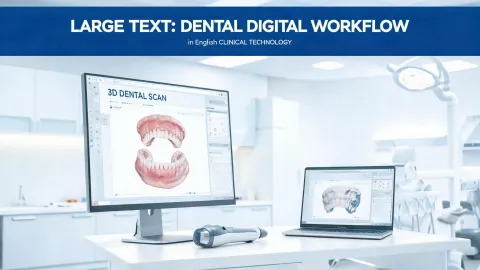
That's where the Straumann digital library comes in. It contains the scan body geometries, abutment profiles, and restoration components that make the digital chain work. It also tells the intraoral scanner where the implant is, what the abutment profile looks like, and how the final restoration should sit. If the library is missing a file, or if the connection profile is outdated, the whole chain breaks.
The question nobody asks the buyer: how does an intraoral scanner work?
I'm not a dentist. I don't need to understand intraoral scanner algorithms for my own job. But I need to know enough to ask useful questions, and the first one is usually: how does an intraoral scanner work?
The basic version: it projects a light pattern onto the teeth, records how that light distorts, and uses software to stitch thousands of images into a 3D model. The model is only useful if it can be matched to the implant system's digital library. That's how a scan body becomes a virtual abutment. If the scanner and the library are not aligned, the model might look perfect on screen and still be wrong in the mouth.
I learned this when we had to remake a crown. The scan looked great. The catalog part number was correct. But the digital library file used the wrong connection profile. The lab milled it. It didn't fit. The dentist wasn't angry at the lab, or at the scanner, or at the catalog. She was angry at the system. And I had to re-buy the whole thing.
That's the hidden problem. No vendor brochure tells you about the misalignment between components. The part number exists. The icon exists. But the software chooses a different version of the geometry, and the patient's appointment becomes a do-over.
The cost of ignoring the workflow
Let me give you two non-dental examples, because they shaped how I buy everything now.
First, the electric wheelchair. The spec sheet said a certain range. We bought it based on that. The actual range with a real patient in a real building was maybe 60% of that. The clinic had to buy a second wheelchair. The total cost was not the price of the first one. It was the price of the second one plus the inconvenience of the day when the first one stopped mid-hallway. I should have asked about real-world conditions instead of trusting the brochure's test scenario.
Second, the PET scanner. I helped with the purchasing process for a hospital imaging suite. The scanner's price was negotiated, but the ongoing cost of tracers, calibration, and uptime contracts almost doubled the five-year cost. Honestly, the hardware was the smaller part of the financial picture. If I'd looked only at the machine, I would have missed the bigger problem.
The same logic applies to dental implants. The implant fixture is the smallest piece of a large puzzle. The actual purchase includes the digital library, the scanner software, the lab's ability to read the files, and the dentist's familiarity with the system. If you ignore those, you're not buying an implant system. You're buying a future negotiation.
In dental offices, the patient usually can't tell you if the implant surface has a particular technology or not. They can tell you if the crown fits on the first visit, if the appointment felt smooth, and if the dentist seemed confident. That's brand perception. It gets built one chair at a time.
When the numbers said one thing and my gut said another
A few years ago, I was choosing between two vendors for an imaging component. The spreadsheet clearly preferred the cheaper vendor: 15% lower price, similar specifications, faster shipping. My gut said the other vendor, because they answered technical questions without euphemisms. I went with the spreadsheet. Three months later, the integration with our existing workflow failed. We spent $3,200 on consulting fees to untangle a problem that a better vendor might have prevented. The spreadsheet didn't have a column for whether the vendor understood the real workflow.
Now I ask a different set of questions before I open any catalog. These are the questions I wish someone had told me to ask when I first started:
- Who supports this after the sale? Can I call a real person, not a ticket system?
- How will this work with the scanner and lab we already use?
- What happens when the physical component and the digital file don't match?
- What evidence exists for the claims in the catalog?
That last one matters more than most people think. Per Federal Trade Commission advertising guidelines, claims need to be substantiated. So when a rep tells me something is fully compatible, I ask them to show me. Not as a gotcha. I just want to see what kind of thinking they bring to the table.
The short version: start with the library, not the catalog
If you're considering Straumann, the Straumann catalog is a great place to see the breadth of options. But if you're the buyer, start with the workflow. Check the Straumann digital library against the scanner you already own. Ask the lab which files they actually use. Ask a sales rep how the scanner talks to the library. If their explanation includes the phrase we will figure it out during integration, that's a red flag.
Also understand what compatible means. It doesn't mean the same brand. It means the physical abutment, the scan body, the library file, and the milling process are all based on the same trusted geometry. That's why a system approach matters. It's not about being loyal to a brand. It's about reducing the number of variables.
I'm not going to tell you that Straumann products are perfect—that isn't the point. The point is that a quality system is more than a catalog of parts. It's the confidence that the digital plan will arrive in the patient's mouth without a surprise. The patient never sees the part number. They feel it when the crown fits. That feeling is your reputation.
So before you compare prices, compare the invisible parts. The digital library. The training. The integration. The support. Those are the true product. The catalog is just the beginning.