At 2:45 p.m. on a Tuesday, a final crown won’t seat. The scan showed the implant at ideal depth. The lab followed the prescription. The components were all marked Straumann. Yet the margin stays open, and everyone in the operatory silently asks the same question: which part is wrong?
I’ve spent the last four years on the other side of that question. I review returned components for a dental implant company. I do not place implants. I look for the reason a perfect-looking case did not work. Most of the time, the returned implant or abutment is within specification. The part is not the problem. The process around the part is.
When I first started doing this work, I assumed the opposite. I thought a misfit had to be a component issue. I checked implant fixtures, abutment seats, and scan body tolerances. I was looking in the wrong place.
The Surface Problem: It Looks Like an Implant Failure
The surface problem is usually described as a fit issue. The crown doesn’t seat. The screw feels tight but the rotation is wrong. The clinician sees a gap on the x-ray and blames the implant connection. The lab sees good geometry and blames the clinical impression. Somewhere in that loop, the hardware gets blamed first.
That reaction makes sense. When a Straumann dental implant is involved, people trust the implant. And in most cases, the trust is justified. But the implant is only one part of a longer chain. The chain includes the scan, the planning file, the guide, the abutment, the CAD/CAM restoration, and the handoff between everyone who touches those files.
In quality work, I’ve learned to ask a different question. Not “which component is defective?” but “which step was never verified?”
What Other Medical Devices Taught Me
Before dental implants, I worked with other medical devices. Early in my quality career, I reviewed instructions and complaint data for devices used in hospitals. That background taught me one reliable rule: the device is the constant; the operator’s verification steps are the variable.
Nobody in an operating room assumes a surgical energy device is ready just because it’s plugged in. You check the return electrode, the settings, and the patient contact point. A mammography unit can be state-of-the-art, but the image is diagnostic only if the patient is positioned properly. And if someone asks how to use a nebulizer, you don’t say “turn it on and breathe.” You confirm the dose, the mask seal, and the breathing pattern.
Dental implantology is no different. A Straumann implant is a precise, well-documented component. But precision is lost when the information feeding it is wrong.
The Deeper Problem: A Digital Handoff Nobody Owned
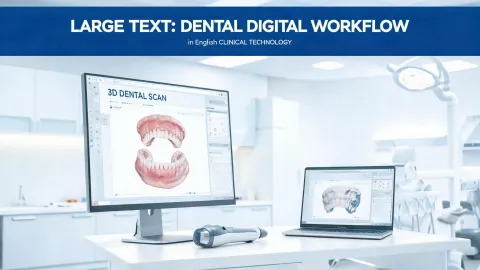
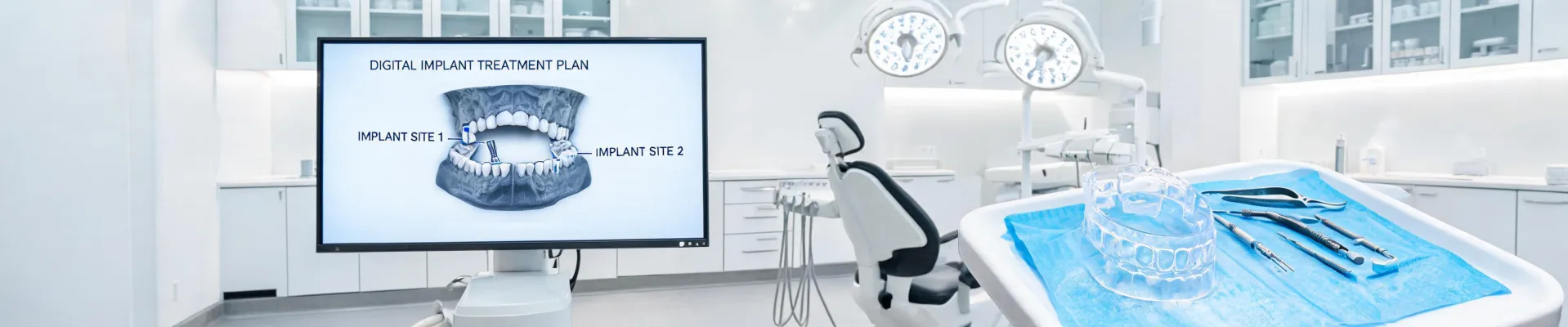
In a Straumann digital workflow, precision depends on transfer. The intraoral scan creates a 3D model. The planning software places an implant library component into that model. The guide is printed. The abutment is selected. The restoration is milled. Each transfer is an opportunity for a silent error.
The most common error I see is not dramatic. It is a scan body that was scanned but not verified. If the scan body is not fully seated, the software does not know. It simply builds a clean virtual world around an inaccurate assumption. The plan can look perfect. The crown can look beautiful. And the final restoration can still be completely wrong.
Another common error is a file mismatch. A scan is exported in the wrong units. A library version is outdated. A guide is designed from a mesh that was decimated too aggressively. No single person notices because no single person owns the whole handoff.
I once audited a group of returned cases where every component met its print specification. But in case after case, the scan body had not been checked before scanning. The software had done exactly what it was supposed to do—around a bad starting point. That is the pattern I see more than any hardware defect.
The Cost Is Never Just the Lab Bill
A misfit after implant placement is not just a remake. It is an extra appointment. It is a temporary that has to stay in longer. It is explaining to the patient that the first attempt did not work. It is the slow erosion of confidence, both for the patient and for the team.
Financially, the cost is usually much larger than the component. One expensive abutment is not the issue. The issue is chair time, lab production time, delivery time, and the quiet cost of a case that should have been predictable but wasn’t.
If the case is an immediate-load case, the cost becomes even sharper. The patient took time off. The surgery slot was reserved. The provisional was planned for a specific day. Once the guide does not seat, that time is gone. No rush fee can buy back the original timeline.
What I Would Check Before Opening the Implant
I cannot tell anyone how to practice dentistry. But from a quality perspective, I would add a verification step at every handoff, especially before anesthesia is even started.
- Verify the scan body physically. Do not trust the software image. If the scan body moves, is tilted, or does not feel right, stop before scanning.
- Verify the file before sending it out. Check the patient ID, the date, the units, the implant position, the scan body part number, and the software version. That takes two minutes and prevents expensive confusion later.
- Verify the surgical guide before surgery. If the guide does not seat passively on a model, it will not seat reliably in the mouth. This is the cheapest moment to discover a problem.
- Assign one owner for fit. Somewhere between the clinic, the planner, and the lab, one person should be responsible for asking “did we verify the last step?” before the implant is placed.
The rest is simpler than most people expect. After a case fails, every component can be measured. But by the time the component is returned, the clinical process has already failed. The goal is to catch that failure before it reaches the patient.
Straumann equipment is not magic. It is extremely reliable. But reliability is not a guarantee. It is the result of a workflow that was verified, checked, and owned by someone who refused to assume the next step was fine.
When a case goes wrong, don’t start with the implant. Start with the process. The implant is the strongest link in the chain. The chain is where the work begins.