It was a Tuesday afternoon in Q2 2024, right in the middle of our quarterly budget review. I was staring at a spreadsheet that had been color-coded so many times it looked like a Mondrian painting. My colleague next to me, Dr. Patel, leaned over and pointed at the line item for 'Implant Systems.'
“We’re spending a fortune on this Straumann stuff,” he said. “Can’t we just switch to something cheaper?”
It’s a question I’ve heard a hundred times. And for years, I didn’t have a great answer that wasn’t just, “Because that’s what we’ve always used.” But after tracking every penny across 180+ orders over the last six years, I can finally give you the real answer. And it’s not as simple as you think.
The Setup: Why I Even Cared About the Cost
To be clear, I’m not a clinician. I’m the person who manages procurement for a mid-size dental practice. We place a decent volume of implants every year, and my job is to make sure we have the parts we need, when we need them, without blowing our annual budget ($180,000-ish, for the record).
When I started, I was like most people in procurement: I looked at the unit price. And on that metric, Straumann was not the cheapest option. Not even close. I remember pulling quotes from three different vendors in my first year. One offered a BLT implant at a price that was about 15% lower than Straumann’s list. I almost went with them.
Then I made my first big mistake.
The Turning Point: When 'Cheaper' Cost Us More
I didn’t switch entirely, but I did test a small batch of those lower-priced implants. I figured, hey, they’re all titanium, right? How different can they be?
Pretty different, as it turned out.
We had issues with the TiBase not seating properly. The driver engagement wasn't as clean. One piece even stripped during insertion. Nothing catastrophic, but it cost us time. And time is money in an operating room.
I remember going back to Dr. Patel after that case. He wasn’t angry—more disappointed. “You saved us $60 on the implant,” he said, “but we spent 20 extra minutes wrestling with it and had to use a backup healing abutment. That’s not a win.”
He was right. I calculated the total cost of that 'cheap' experiment: the lost chair time, the wasted staff hours, the minor frustration. It worked out to roughly $450 more than if we’d just used the Straumann component in the first place. That was a harsh lesson.
It took me about three years and maybe 80 orders to really understand that the unit price is just the starting point. The real cost is in the predictability of the system.
So, Is Straumann Actually 'Worth It'?
I’d say that depends entirely on how you define 'worth it.' If you’re looking at a line-item comparison, no, Straumann probably won’t win. But if you look at total cost of ownership, the math changes.
Here’s what I mean by TCO for an implant system:
- The implant itself: The obvious line on the invoice. Straumann is premium-priced.
- The components: TiBase, abutments, healing caps. These add up fast. Some vendors nickel-and-dime you here. Straumann pricing is more transparent, but still high.
- The surgical kit: If you’re in the BLT system, the surgical kit is a big upfront cost. But it’s a one-time purchase, and the quality is excellent. I’ve seen cheaper kits that need replacing after two years. Ours is on year four and still going strong.
- Training & support: This is a hidden cost. Straumann’s clinical support team saved us from a bad surgical plan once. That alone paid for a year of premium pricing.
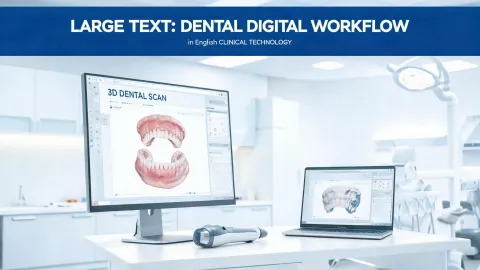
- The digital workflow: We use the Straumann digital library for guided surgery. The integration is seamless. A cheaper 3rd-party library might work, but if it doesn’t match perfectly, you’re burning chair time editing.
When I ran the numbers last year, the total per-case cost (implant + components + surgical wear + support) for a Straumann BLT case was within 5% of a cheaper alternative when everything goes right. But when things go wrong with the cheaper alternative—which they did, 3 times in 40 cases—the cost delta swung massively in Straumann’s favor.
That’s the key insight for me. It’s not about whether Straumann is 'better.' It’s about predictability. I’d rather pay a premium for a predictable outcome than gamble on saving a few bucks.
A Word on the 'Everything' Trap
One thing I’ve learned is that no vendor is perfect at everything. I’ve seen suppliers try to sell us everything: the implant, the motor, the milling unit, the sterilization wrap. Don’t fall for it.
Straumann is excellent at implants, surgical components, and digital workflow. They’re not my first choice for portable ultrasounds or wound care products—those are completely different markets. If a vendor says they can do everything, it usually means they’re excellent at one thing and mediocre at the rest. Stay focused.
The vendor who said “We can’t do that, but here’s who can” earned my trust for everything they did say they could do.
The Bottom Line (For Real This Time)
After six years and a lot of learning (and un-learning), here’s where I landed:
- Straumann is not for everyone. If you’re a low-volume clinic that only does straightforward single-unit cases, their premium pricing might not make sense. A good mid-tier implant might be fine for you.
- But for complex cases or high-volume practices, the predictability is worth it. The SLActive surface data is real. The BLT surgical protocol is rock-solid. The digital workflow saves us hours per case.
- Never, ever assume ‘cheaper’ is cheaper. I learned that the hard way. Now I always calculate TCO before saying yes to a new vendor.
Oh, and one more thing. That colleague who asked me about switching to a cheaper implant in Q2 2024? He’s now the biggest advocate for staying with Straumann. We ran a blind test on a double case. He couldn’t tell the difference from a surgical feel, but he could tell the difference in the 3-month follow-up X-ray. The SLActive healing was visibly faster. Case closed, as far as he’s concerned.
So, is Straumann expensive? Yes. Is it worth it? For us, absolutely. Your mileage may vary, but I’d suggest running the numbers before you make a call. Don’t just compare the unit price. Compare the total cost of a successful case. That number is the only one that matters.