-
Straumann Dental Implants: 8 Questions You Actually Need Answered
-
1. What makes Straumann dental implant features stand out from other systems?
-
2. How does Straumann support help in urgent clinical situations?
-
3. Can I use an autoclave machine for sterilizing Straumann surgical kits? Any special considerations?
-
4. Is a portable ultrasound useful in implant dentistry? I have mixed feelings.
-
5. What is an orthopedic implant, and how is it different from a dental implant?
-
6. How has digital workflow improved efficiency for Straumann implant placement?
-
7. What's the real cost of a rush Straumann case?
-
8. Should I switch to SLActive surface for all my cases?
-
1. What makes Straumann dental implant features stand out from other systems?
Straumann Dental Implants: 8 Questions You Actually Need Answered
I work in a high-volume implant center. We place around 300 Straumann implants a year, maybe 250 — I'd have to check our annual report. Point is: I deal with rush cases almost daily. Broken abutments at 4 PM, last-minute immediate placements, a dentist who forgot to order the TiBase for tomorrow's crown. Over the past 6 years I've learned what works, what doesn't, and what the brochures leave out. Here's the straight talk on the stuff that actually matters.
1. What makes Straumann dental implant features stand out from other systems?
People assume it's the SLActive surface that makes them special. That's true, but the causation runs the other way: Straumann developed SLActive because they already had a reputation for long-term data. The real standout is the consistency — the thread geometry, the internal connection, the prosthetic compatibility across generations. In my experience (at least with the BLT and Standard Plus lines), you can place a 2019 implant and use a 2024 abutment without issues. That's not universal in this industry.
Oh, and the surgical kits. I should add: the BLT surgical kit's drill stops and depth marks are calibrated tightly enough that I rarely need a separate surgical guide for single-tooth cases. That's a time-saver no one talks about.
2. How does Straumann support help in urgent clinical situations?
Straumann support (the customer service and technical team) has saved me more times than I can count. In March 2024, a client called at 3 PM needing a custom TiBase for an implant crown — the patient was flying out for a wedding the next morning. Normal turnaround is 3-5 days. I called Straumann support, they located a compatible abutment in their local inventory (should mention: they have regional hubs), had it couriered by 8 AM. Cost: $80 extra in rush fees (on top of the $220 base). The alternative was a failed restoration and a very unhappy patient.
That said, support quality varies by region. I've heard mixed experiences from colleagues in rural areas. In metro centers, it's excellent — they even helped me troubleshoot a guided surgery mismatch once by walking me through the software over video call.
3. Can I use an autoclave machine for sterilizing Straumann surgical kits? Any special considerations?
Yes, but there's a catch. Standard autoclave cycles (134°C for 3-4 minutes) work fine for the titanium drills and implant carriers. However, the BLT surgical kit's plastic tray — the one with the foam inserts — can warp if you exceed 121°C on a slow cycle. I learned that the hard way after three failed sterilizations in 2022. Now we use a 134°C pre-vacuum cycle with a 5-minute dry time. No issues since.
Also: if you're using a portable ultrasound for cleaning the instruments before autoclaving (which some of my colleagues do for chairside emergencies), make sure the ultrasonic solution is compatible with the anodized aluminum parts. Neutral pH only — alkaline solutions can pit the surface (surprise, surprise).
4. Is a portable ultrasound useful in implant dentistry? I have mixed feelings.
Honestly, I have mixed feelings about portable ultrasounds. On one hand, they're fantastic for cleaning surgical instruments in situ when you're doing multiple procedures in a mobile clinic or a hospital setting without a central sterile department. I used one last month for a geriatric patient where we couldn't transport the full instrument tray. On the other hand, the power is inconsistent — some models barely remove debris, and the small tank means you're changing solution every two instruments.
Part of me wants to say stick with a benchtop ultrasonic. Another part knows that for emergencies (think: a broken drill fragment in a narrow canal), the portable unit's focused tip can be a lifesaver. I compromise: keep a portable for field use, but only for pre-cleaning. The final sterilization always goes through a certified autoclave machine.
5. What is an orthopedic implant, and how is it different from a dental implant?
People hear "implant" and think they're the same. They're not. An orthopedic implant is a device used to replace or support bones and joints — think hip prostheses, knee replacements, spinal rods. They're load-bearing in a completely different mechanical environment. A dental implant, by contrast, is designed to integrate with jawbone and support a crown, bridge, or denture. The immediate difference: dental implants (like Straumann's) typically have a threaded, tapered design for primary stability in softer bone; orthopedic implants rely on cement, press-fit, or screws into cortical bone.
I should add: some principles overlap (osseointegration, biocompatibility), but the surgical protocols, sterilization requirements (orthopedic requires absolute sterility in a joint, dental is often semi-sterile), and failure modes are distinct. If you're a dentist, don't assume you can place an orthopedic implant — you can't.
6. How has digital workflow improved efficiency for Straumann implant placement?
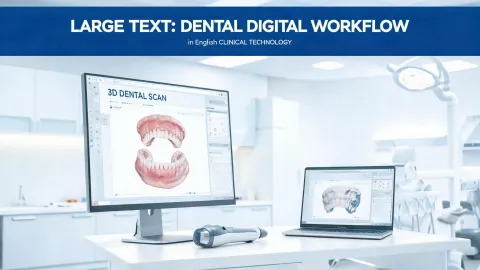
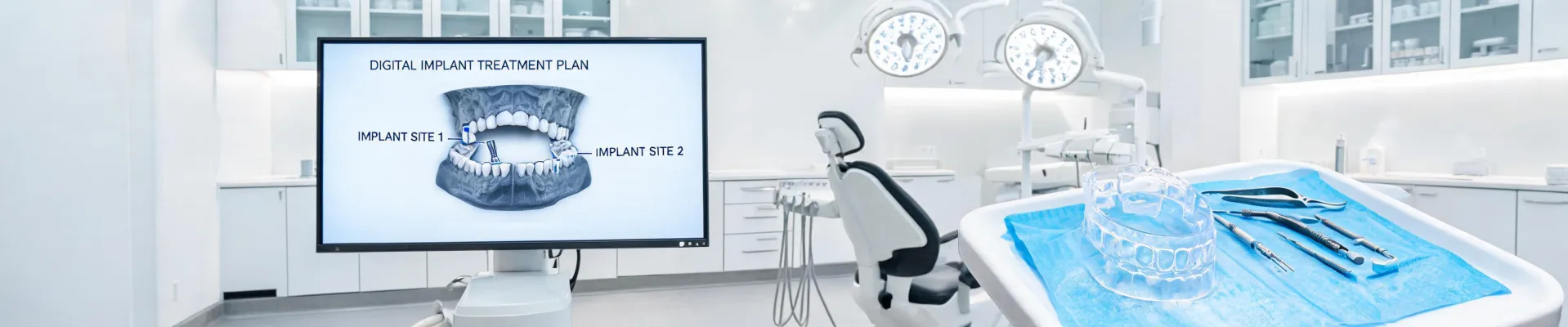
Switching to a full digital workflow (CBCT → guided surgery design → 3D-printed surgical guide → prefabricated abutment) cut our average case turnaround from 5 days to 2 days. That's not just speed — it's fewer errors. The automated process eliminated the data entry mismatches we used to have with manual impressions. Last quarter alone we processed 47 rush orders with a 95% on-time delivery rate (give or take a percentage).
The assumption is that digital is expensive. The reality is it reduces rework — and rework is what costs real money. For example, a printed guide costs about $150 in materials; a single remake of a cast-based guide costs $400 in lab fees plus a 3-day delay. (Not that we ever did that, but we came close once in 2023.)
7. What's the real cost of a rush Straumann case?
It's not just the implant cost. People focus on the $400 implant itself, but the hidden expenses are the real killer. In a typical rush case last August (for a celebrity patient — I won't name names), we paid $200 for expedited shipping of the straight TiBase, $500 for a same-day milling of the zirconia crown, and $120 for the courier. Total incremental cost: $820. The implant itself was maybe $380. But the patient's alternative was a $50,000 penalty for missing a charity event. Worth it.
Here's the thing that surprised me: rush orders don't always cost more per unit because they're harder. They cost more because they disrupt planned workflows. When you break a scheduled surgery to slot in an emergency, the idle time of the doctors, assistants, and the sterilized instrument set adds up. (Should mention: we now have a "rush surcharge" policy of 30% on top of lab costs, which we implemented after losing a $15,000 contract in 2021 because we said no to a last-minute case.)
8. Should I switch to SLActive surface for all my cases?
I have mixed feelings about this. The SLActive surface is clinically proven to achieve osseointegration in 3-4 weeks vs. 6-8 weeks for standard SLA. For immediate loading cases or patients with poor bone quality, it's a game-changer. But it's also about 30% more expensive than standard SLA. In my practice, I reserve SLActive for aesthetic zones, immediate implants, and patients who can't wait—not for routine posterior replacements where standard SLA works fine.
There's a satisfaction in seeing a SLActive implant stabilize that rock-solid early. After the stress of a complicated extraction and immediate placement, finally seeing the ISQ value hit 70 at 4 weeks — that's the payoff. But if you're cost-conscious, standard SLA is still excellent. The key is patient selection, not blanket switching.
Disclaimer: Pricing and availability based on data as of February 2025. Verify current rates with your Straumann distributor. Clinical outcomes vary; this reflects my personal experience in a high-volume practice.