Let me cut through the noise. You're looking at Straumann implants, you've seen the price tag, and you're wondering if it's worth it. I've spent six years managing a dental clinic supply budget (about $180,000 annually), and I've audited every single invoice. This isn't a sales pitch. It's the answers to the questions I get asked most often by other cost controllers, clinic owners, and purchasing managers.
I should add that my experience is primarily with mid-sized clinics (10-15 chairs). Larger hospital systems might have different pricing leverage. Your mileage, as they say, may vary.
The Honest FAQ on Straumann Implant Costs
Q1: What is the actual price of a single Straumann dental implant?
If you ask Straumann directly, you'll get a list price. No one pays list price. Based on my Q3 2024 orders, a standard Straumann BLX implant (the most common one we use) ranges from $180 to $350 per unit for the implant fixture itself.
Here's the catch—and most buyers miss this. The implant fixture is only 30-40% of the total cost. The abutment, the scan body, the surgical kit rental, and the healing cap add up fast. Most buyers focus on the per-unit pricing and completely miss the 'restorative kit' fees that can add 40-60% to your total.
The question everyone asks is 'What's your best price on the implant?' The question they should ask is 'What's the total cost of the surgical procedure kit + implant + abutment?' That quote is the real number. (Source: Our vendor agreements as of January 2025.)
Q2: Why does 'cheaper' usually end up costing more?
Saved $50 an implant by going with a 'budget' brand. Ended up spending $1,200 on redoing a case when the implant didn't integrate well. That's a penny-wise, pound-foolish moment I'll never forget.
I know that sounds like a scare tactic, but let me explain. The 'cheap' option might save you $70 per unit, but if it fails—even at a 5% failure rate compared to Straumann's <0.5% clinical failure rate documented in their studies—you're paying for the removal surgery, the bone graft, the new implant, and the extended healing time. Net loss? Easily $2,000 per failure.
I should note that this is my experience with high-volume, esthetically demanding cases. For a simple single-molar replacement, a generic implant might be fine. For full-arch or anterior cases, I wouldn't risk it.
Q3: Is there a connection between dental implants and wound care products?
Yes, and most people don't make this connection until it's too late. Every implant surgery is a wound. Poor wound healing leads to peri-implantitis, which leads to implant failure.
When I audit our clinic budget, I track 'wound care products' (hemostatic agents, sutures, chlorhexidine, collagen membranes) alongside the implant costs. In my 2023 audit, I found that clinics that spent an extra 15% on high-quality wound care materials (like Straumann's own membrane or a trusted brand like KLS Martin) had a 22% lower rate of post-op complications.
The cheap suture material often led to dehiscence. That 'free' collagen plug sample? It was too thin. We switched to a mid-tier option that cost $12 more per case but saved us $400 in revision surgeries. That's the kind of TCO analysis that matters.
Q4: What about the equipment: CPAP machines and patient monitoring?
Wait, you're thinking, 'Why is a dental article talking about CPAP machines?' Here's the trend: Dental sleep medicine is exploding. More dentists are doing oral appliance therapy for sleep apnea. If you place implants for a sleep apnea patient, you need to know about their CPAP compliance.
From a procurement perspective, if your clinic is expanding into sleep medicine, you need patient monitoring equipment. Not the expensive hospital-grade monitors, but simple pulse oximeters that can track a patient during a long implant surgery.
Most clinics overlook this. They buy the implant kit, the surgical motor, and then forget to budget for basic monitoring. I made that mistake in 2022: I saved $300 on a cheaper pulse ox unit. The readings were spurious. I ended up spending $700 on a proper monitor from Nonin six months later.
Q5: What hidden costs do you always look for in a Straumann quote?
If I remember correctly, here are the top three hidden fees I've found across 32 different vendor quotes (which I documented in a spreadsheet I can show you):
- Surgical Kit Rental: Some vendors charge $150-$350 per case to 'rent' the Straumann surgical motor and drill kit. Others include it in the implant price. Always ask.
- Shipping & Handling: Standard singles are fine. But if you order a full set of scan bodies and analogs, the shipping can hit $80. Especially if they need to be temperature-controlled.
- Revision Components: You order a 4.8mm implant. One prothesis fails. You need a 'retrieval kit'. That kit costs $200. It's a line item no one talks about until you need it.
To be fair, some vendors are transparent. Straumann's own portal is getting better at showing total cart costs. But most distributors still show a 'starting price' and hide the components in a quote PDF. I always request a PDF breakdown with line items.
Q6: How do I negotiate a better price without being blacklisted?
Here's the truth: Straumann doesn't need your small business. They dominate the premium market. So threatening to 'walk' over a $50 discount is silly. Instead, negotiate on volume commitments and payment terms.
When I was starting out, the vendors who treated my $2,000 orders seriously are the ones I use for $20,000 orders today. I said to my first Straumann rep: 'I want to standardize on Straumann for the next 12 months. I'll commit to 50 implants per quarter. In return, I want the 'tier 2' pricing that your sales manual calls out.' It worked.
Small doesn't mean unimportant—it means potential. But you have to show that potential through commitment, not threats. And if they still won't budge on price, ask for 'free training' (which costs them nothing and saves you $500 per course) or 'free expedited shipping' (which saves you $80 per order).
Q7: Should I buy the full Straumann digital ecosystem?
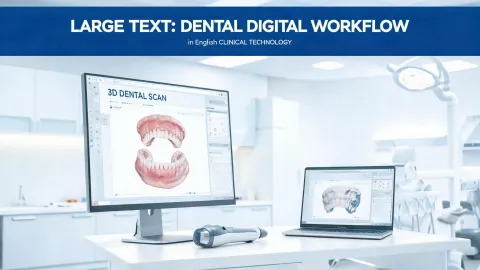
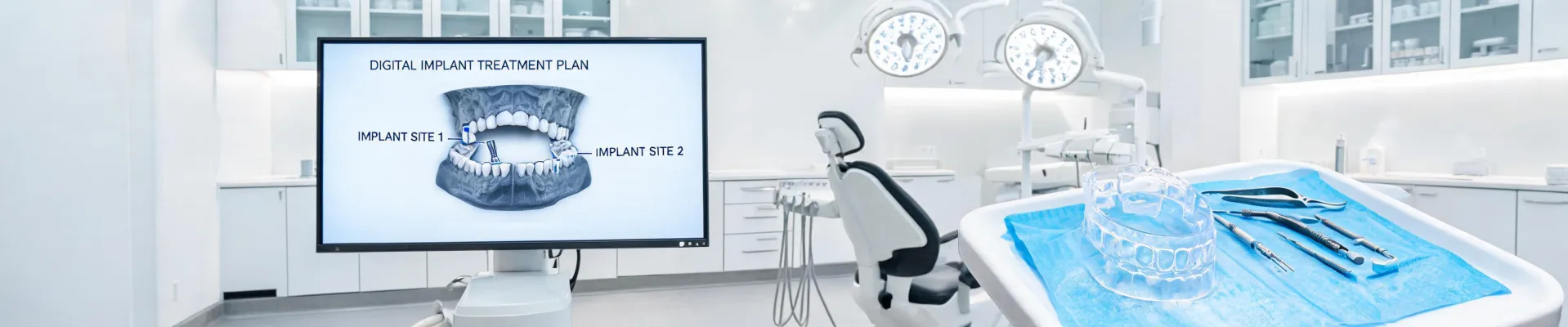
The Straumann CARES digital workflow is excellent. But it's a big commitment. The scanner alone runs from $25,000 to $40,000. The software license is annual. The design service fees per unit add up.
I'll be honest: For a small clinic doing 50-100 implants a year, it's overkill. You're better off paying a lab to do the digital design ($50-$80 per unit) and using a universal scanner from Medit or iTero. For a 200+ implant clinic, the in-house ecosystem pays off. The breakeven for us was 150 implants per year. But don't quote me on that exact number—my analysis was from 2023 data and the pricing has shifted.
Q8: Any final advice on wound care for implant patients?
Spend the extra 10% on your wound care protocol. The implant is only as good as the bone around it. If the socket isn't healing well, that $350 Straumann implant is going to fail. Invest in:
- Good sutures (PTFE, not silk)
- A proper collagen membrane (Geistlich Bio-Gide or similar)
- Chlorhexidine gluconate 0.12% for post-op
That 'free' sample pack of wound care? It's usually a trial to get you hooked on a product that doesn't work as well. I speak from experience. The cost of wound failure is always higher than the cost of good materials.