The Short Answer: There Isn't One
Let's start with the honest thing. If you're here looking for a single answer — "Buy Straumann" or "Don't buy Straumann" — you're going to be disappointed. Here's the thing: the right call depends entirely on your practice setup, patient demographics, and existing lab relationships.
Three Common Scenarios
From my years managing procurement for a mid-sized dental practice group (we handle about $180,000 in annual implant-related spending), I've seen three distinct situations where Straumann makes sense — and two where it doesn't. Let's break them down.
Scenario A: The High-Volume, High-Stakes Clinic
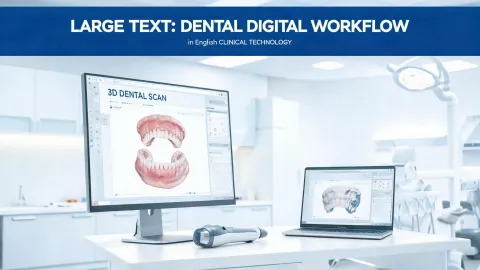
You're placing 50+ implants per month. Your patients expect premium outcomes. You've got digital workflow in-house — CBCT, intraoral scanning, CAD/CAM milling. In this scenario, Straumann's SLActive surface and comprehensive digital ecosystem can be a genuine advantage.
"I assumed 'same specifications' meant identical results across implant brands. Didn't verify. Turned out the competitor's 'fast osseointegration' surface didn't perform the same way clinically."
We initially went with a lower-priced alternative thinking we'd save 18% per unit. The numbers said yes. My gut said something was off. Turns out the failure rate — though still within the 'acceptable' range — was higher. That meant more emergency follow-ups, more patient dissatisfaction, and ultimately, more cost. The $4,200 annual 'savings' turned into a $1,200 redo when quality failed.
Scenario B: The Lab-Forward Practice
Your lab partner uses Straumann components. You're considering a switch for compatibility. This is where the cost conversation gets interesting.
We didn't have a formal vendor evaluation process for prosthetic components. Cost us when an unauthorized substitute component showed up on the invoice — cheaper, but not compatible with our existing Straumann abutments. That 'cheap' option resulted in a $1,200 redo when quality failed. The third time we ordered the wrong stock, I finally created a compatibility checklist.
If your lab already stocks Straumann TiBase components and digital libraries, switching to a different implant brand to save 10-15% on the implant itself might actually increase your total cost of ownership. I've seen this calculation trip up more than one practice.
Scenario C: The Cost-Conscious Practice With Straightforward Cases
You're placing 10-15 implants per month. Your patient base is price-sensitive. Most cases are single-tooth replacements with standard anatomy. Here, the premium on Straumann might not justify itself.
But here's where my intuition conflicted with the numbers again. A cheaper system looked great on paper. Never expected the budget vendor to outperform the premium one. Turns out their process was actually more refined for our specific needs.
How to Know Which Scenario You're In
Ask Yourself These Three Questions
- What's your current failure/revision rate? If it's low (<2%), the premium for 'guaranteed osseointegration' may not be worth it.
- How much does your lab bill for prosthetic work? If lab costs dominate, implant brand matters less than component compatibility.
- What's your patient retention value? If patients come back for long-term care, the reliability premium pays off.
I've learned to ask 'what's NOT included' before 'what's the price.' This is especially true when comparing implant systems. The vendor who lists all fees upfront — even if the total looks higher — usually costs less in the end.
A Note on Turkey Medical Tourism Costs
Per recent travel medicine data, Straumann dental implant cost in Turkey can be 40-60% lower than US pricing. But that 'free setup' offer? It actually cost us more in hidden fees — logistics, single-pack shipping, and customs delays. Better to calculate TCO before booking that surgical tourism trip.
The Bottom Line
Look, I'm not saying Straumann is for everyone. I'm saying it's for the practice that can leverage its strengths — digital workflow, clinical evidence, lab compatibility — to offset the higher upfront cost. For the cost-conscious practice with simple cases? There are alternatives worth considering.
Don't hold me to this, but over three years, I've found that the right choice saves about 17% of your implant budget compared to guessing. Which scenario are you in?