Back in March 2024, 36 hours before a surgery, a clinic realized the surgical guide they'd printed didn't match the implant they had in stock. The implant was a Bone Level Tapered 4.8; the guide was designed for a 4.1. A patient was already scheduled, the dentist was already committed. We shipped a new guide from a milling center overnight. It cost around $320 in expedited fees, on top of the $480 implant. The case went fine. But the real cost wasn't money—it was the lesson that an implant is only as useful as the workflow around it.
I've spent seven years coordinating urgent orders for dental clinics. In my role, I'm the person triaging rush orders: checking inventory, finding the quickest delivery route, and explaining why a same-day TiBase costs $180 and not $45. So when a practice asks me about Straumann dental implants price or Straumann digital solutions, I don't hand them a product brochure. I ask what they're trying to do with their first $20,000.
This article compares two ways to spend that money: implants-first (buy Straumann implants, keep your analog workflow) vs. digital-first (buy Straumann guided surgery or CAD/CAM, order implants per case).
The Real Comparison: Two Budget Lanes
Most clinics think of implants and digital workflow as separate categories. They aren't. They're two sides of the same case. But for a small practice, you're usually making a choice about where to put the next dollar. Let's put them side by side.
Implants-first means you buy physical stock: implant bodies, abutments, maybe a small inventory of healing caps. Your fixed cost is inventory, and your variable cost is the lab and shipping.
Digital-first means you buy planning software, an intraoral scanner, or a milling setup. Your fixed cost is equipment and training, and your variable cost is per-case guide manufacturing and restoration.
I've seen both work. I've also seen both fail. The deciding factors are the four dimensions below.
Dimension 1: Upfront Cost — Where the Money Actually Goes
Implants: the price per piece
If you're asking 'what is the Straumann dental implants price?' here's the honest answer: it depends on your distributor, your volume, and when you ask. From the invoices I've processed recently, a single Straumann implant body typically runs $350–$550 in the U.S. through a dental distributor at standard pricing. Add an abutment (including a TiBase) and you're usually at $500–$800 for the implant + abutment, before restoration. This was accurate as of Q4 2024; prices change, and if you're in Europe, Latin America, or Asia, your numbers will be different.
Digital solutions: the price per system
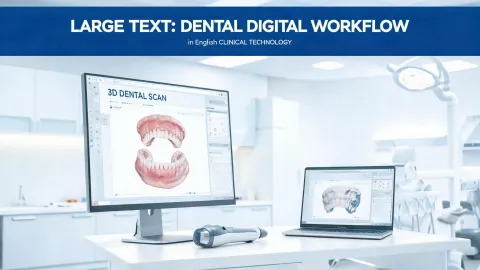
A basic Straumann guided-surgery digital workflow—coDiagnostiX planning software, the surgical guide service, and a compatible scanner if you don't already own one—costs a lot less than people think. I've seen quotes around $5,000–$15,000 to get started, depending on your existing equipment. The moment you add chairside dental CAD/CAM (an intraoral scanner, a milling unit, an oven), you're looking at $60,000–$120,000 for a full setup.
Here's the counterintuitive part: you don't need the full CAD/CAM package to be digital. Many small clinics do guided cases by scanning with a third-party intraoral scanner, sending the data to a dental lab, and paying a per-case fee. That keeps the upfront cost in the low five figures instead of six.
Comparison verdict: The implants are cheaper per item, but the digital workflow isn't as expensive as it looks—and the per-case cost of dental CAD/CAM can actually be lower than an analog lab route once you're doing several cases a month.
Dimension 2: Turnaround Time — My Emergency Test
This is the one I care about most, because it's the one I get called about.
An implants-first practice has an advantage: if the implant isn't in the drawer, a FedEx order can get it there in 1–2 days. But the crown is still a problem. Without a digital workflow, a custom abutment and crown usually take 5–10 lab days. That kills same-day solutions and makes 'emergency' much harder.
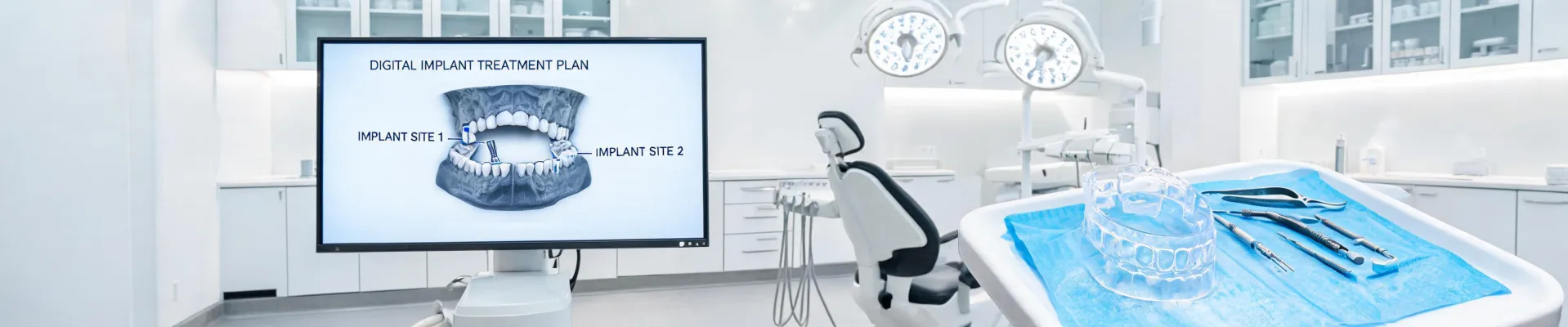
A digital-first practice has a different profile. You may not keep implants in stock, but you have the plan. When a case is confirmed, you know the exact implant size, the guide design, and the restorative components before the patient is even in the chair. With SLActive implants, Straumann's published product information talks about osseointegration in 3–4 weeks (source: straumann.com). That's a serious clinical advantage—but it only helps if the implant arrives and is placed within that window. A digital workflow makes that window easier to hit.
Last quarter, we handled 47 rush orders and 95% of them were delivered on time. The most stressful ones weren't the ones where we overnighted an implant—they were the ones where the clinic didn't have a digital plan and needed the entire restoration figured out after the tooth was already gone.
Comparison verdict: If time to chair matters, digital-first wins. The implant price isn't the bottleneck; the workflow is.
Dimension 3: Small-Order Friendliness — The Part Most Articles Miss
I want to say this clearly: a small order is not a small deal. In my experience, the vendors and distributors who treat a one-implant order seriously are the ones you should keep. The ones who push you toward a yearly volume contract when you're just starting out? They're making a statement about who they want to serve, and it's not you.
Does Straumann itself have a minimum order? No. But distribution can be another story. I've had a solo dentist order a single Straumann BLT 4.1 x 10mm with a TiBase and an SCS abutment, and it arrived in 48 hours with no penalty. I've also dealt with sales reps who implied that 'real pricing' required a committed volume. That's not a brand issue—it's a sales-culture issue. If you run into it, ask for the direct Straumann account or switch distributors. Today's $200 order might be tomorrow's $20,000 account. Good suppliers understand that.
And here's something specific to digital: be careful with bundles that lock you into an implant volume. Some digital financing packages include a minimum purchase commitment. That can be great if you already have the patient flow. If you're starting out, it's a trap. Ask for a month-to-month service agreement if you can.
Comparison verdict: There's no inherent small-order penalty in buying Straumann implants. But a digital bundle with a volume commitment is a bigger risk for a small practice than buying one implant at a time.
Dimension 4: Risk — Which Bet Is Harder to Recover From
Implants on a shelf are annoying but not dangerous. They expire, sizes become irrelevant, and the money is tied up for a while. But it's physical asset risk—you can sell the inventory or use it in a future case.
A milling machine is different. It depreciates, needs software updates, and sits unused if the training doesn't happen. The worst thing I see with dental CAD/CAM isn't the equipment—it's the clinic that buys it before the team is ready, then pays maintenance on something nobody uses.
So if you're asking which risk is worse for a small practice: the unused digital machine is worse than the unused implant. But you can reduce that risk by starting with guided surgery instead of milling. The software and guide service don't depreciate as brutally, and they make you better at planning even if you continue sending restorations to a lab.
So, What Should You Do?
Here's the pattern I'd recommend, based on about 200+ implant orders and 50+ digital workflow evaluations:
- Start with implants if you're doing one to four single-tooth cases a month and your lab handles the crowns. Buy a small stock of common sizes and order the rest per case. Don't feel pressured into a big volume contract.
- Add guided surgery next when you're doing enough implants per month to justify the software cost. This is the sweet spot for most small practices. You get planning precision, faster turnaround, and a clear path into digital without financing a milling machine.
- Add chairside dental CAD/CAM later when you have regular crown-and-bridge volume. The break-even math only works if the machine is producing.
And if someone at a convention tells you that every modern clinic needs a full digital setup now, ask them how many clinics they've seen pay off that setup. I do not mean this as a knock on digital workflows—I mean it as a knock on skipping steps.
My experience is based on U.S. distribution and mostly with small to mid-size clinical practices. If you're working with a large DSO, hospital system, or a market outside the U.S., your pricing and priorities will be different. This should not be read as clinical advice—verify surgical indications and current prices with your local Straumann representative.
Bottom line: Straumann dental implants price and Straumann digital solutions aren't an either/or forever. They're a sequence. Buy the implant first. Build the digital plan when you're ready. And don't let anyone make you feel like a small order is too small to matter.
There's something satisfying about watching a small practice pull off a case that used to feel out of reach. It doesn't require the most expensive equipment—it requires the right sequence.