I've been handling medical equipment purchasing for a dental clinic since 2018. Seven years, nine significant mistakes, roughly $38,000 in wasted budget. I've documented every single one of those errors, and now I maintain our team's procurement checklist so the next buyer doesn't repeat them.
This article compares premium and budget options across four categories we buy regularly: dental implants, digital workflows, patient mobility equipment, and respiratory devices. My grading standards:
- Clinical reliability — does it perform when it matters most?
- Cost per year of use — not just the sticker price.
- Staff burden — does it save our team time or create more work?
- Recovery cost — how much does a failure set us back?
1. Dental Implants: Straumann vs. Budget Systems
The mistake that hurt most happened in June 2022. I ordered 30 implant components from a budget supplier, convinced I was being smart with the clinic's funds. Everything looked fine on paper. The first surgical case, the prosthetic fit failed intraoperatively. We removed the components and redid the surgery with Straumann. That one case cost $4,300 in wasted materials plus a week of delay.
Everyone warned me about gambling with implant quality. I didn't listen. Now I understand.
The premium you pay for Straumann is largely an evidence premium. The SLActive surface, for example, is backed by over a decade of published clinical data on osseointegration. Per FTC guidelines (ftc.gov), health claims require substantiation—and I now apply that same test to every implant manufacturer. If a company can't show long-term studies, I walk away. Budget implants aren't automatically bad. But you're accepting greater uncertainty, and in surgery, uncertainty is expensive.
What Is Shockwave Therapy? A Brief Breakdown
You'll sometimes see shockwave therapy—extracorporeal shock wave therapy, or ESWT—recommended alongside implant placement to accelerate bone healing. It's a non-invasive treatment that uses acoustic waves to stimulate blood flow and cellular repair.
My honest experience: after we moved to SLActive implants for high-risk patients (smokers, diabetics, limited bone density), we saw less need for adjunctive therapies like shockwave. The implant surface was doing more of the work. Shockwave therapy has legitimate uses in musculoskeletal medicine—for non-healing fractures and certain tendon conditions, for example—but as an implant-healing shortcut? I'd rather invest in the right implant from the start.
Comparison conclusion: For healthy patients with straightforward anatomy, a budget implant may be defensible. For compromised healing, the evidence gap is too large. I would never go back to budget implants for bone-graft cases.
2. Straumann Digital Solutions vs. Traditional Analog Workflow
I was late to digital dentistry. Our first fully guided surgery didn't happen until early 2022—after years of diagnostic wax-ups and freehand placement. The difference was startling.
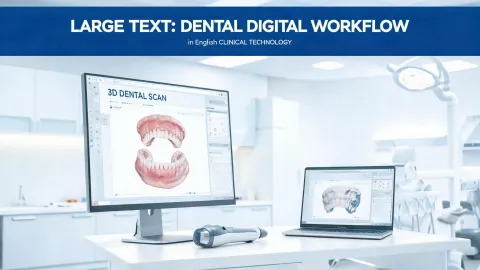
Straumann digital solutions—intraoral scanning, guided surgery software, milled surgical guides—gave us positioning accuracy we simply couldn't achieve freehand. Surgical time dropped roughly 20%. From a clinical standpoint, digital won without argument.
But the biggest surprise had nothing to do with accuracy.
The healthcare staff shortage hit our clinic hard in 2023. A lab technician position stayed open for months. I still get Google alerts for "straumann vacancies healthcare staff shortage" from that desperate period. We couldn't find an experienced dental lab technician, period. The digital workflow changed the equation because a trained dental assistant could now handle most pre-operative planning tasks that used to require a specialist. The bottleneck shifted from "hire a rare expert" to "train a competent operator." That's a far easier problem in a tight labor market.
Cost comparison:
- Analog: Per-case lab fees, manual guide production, plus the hidden cost of waiting on external labs.
- Digital: Higher upfront cost (roughly $17,000 for scanner, software, and printer), but lab fees dropped about 50% per case.
We ran the numbers again in Q4 2024: the digital workflow covers its own cost roughly every 8 months. And in the past 18 months, we've caught 47 potential positioning errors during digital pre-surgical review—47 mistakes our analog workflow would have discovered intraoperatively, or worse, post-operatively.
Comparison conclusion: Below 30 implants per year, the ROI on digital is tight. Above 50, it's not optional—especially when you're short-staffed.
3. Mobility Scooters: Premium vs. Budget—the Surprise Winner
After the Straumann lesson, I overcorrected. I became the buyer who insisted everything be premium. That's how I spent $3,800 on two high-end mobility scooters for post-operative patients. Great batteries, adjustable everything, grippy tires. When we later partnered with a community health program, I bought two budget scooters at $1,400 each. Different brand, modest reviews, nothing flashy.
Never expected the cheap units to outperform. But they did. Lighter. Easier to maneuver in hallways. Zero failures in 14 months. The premium scooters were slightly more comfortable and had a bit more range. Better, yes. $2,400 better? Not even close.
Mobility scooters are a mature product category. The job is simple: transport a patient safely. Once a scooter meets safety and reliability standards, the extra spend buys comfort, not capability.
Comparison conclusion: Write your specification, then get the cheapest unit that satisfies it. Premium is optional here.
4. Nebulizer Machines: When Mid-Range Beats Premium
This mistake was different—less dramatic, but still wasted money. I bought seven top-end nebulizer machines at roughly $580 each for our partner rehab centers, applying the same "premium-first" logic from the implant lesson. Wrong context.
Nebulizer machines do one thing: convert liquid medication into a mist. That's it. Expensive models run quieter and finish a session about a minute faster. The $180 mid-range units we tested were consistent, easy to clean, and no patient ever complained about noise.
In respiratory therapy, the clinical outcome depends on the medication, the dosage, and the patient's technique. The machine just needs to be reliable and cleanable. Mid-range does that.
Comparison conclusion: Buy mid-range for standardized medical devices. Keep your premium budget where evidence and precision actually change outcomes.
What I'd Choose Now
If I could redo seven years of purchasing decisions, this is the playbook:
- Dental implants: Lead with evidence, not price. If I could stock only one system, it would be Straumann. But the premium line is best reserved for medically complex cases; for healthy patients, well-documented mid-priced implants can be defensible.
- Digital workflow: Buy in at 50+ implants per year. Straumann digital solutions paid for themselves through lab savings and staff efficiency—especially during a staffing shortage.
- Mobility scooters: Meet the spec, not the marketing.
- Nebulizer machines: Mid-range, every time. Very little real-world difference above $200.
The right question isn't "premium or budget?" It's "what complexity am I actually dealing with?" Match your spending to the complexity of the problem.
One honest caveat: this advice comes from our context—a suburban mid-sized clinic, roughly 300 implant placements per year, a team that's weathered the healthcare staff shortage like everyone else. If you're a rural solo practice or a high-volume urban center, your calculus may differ. I'm not 100% sure my framework scales to your situation. But it's a defensible starting point.
Pricing cited here was accurate as of Q4 2024. Medical equipment markets move quickly, so verify current costs before budgeting.
The lesson from all that wasted money boils down to this: equipment doesn't have to be expensive to be good. It has to be appropriate. The $38,000 I spent learning that was painful, but at least I only had to learn it once.