The Framework: Two Implant Systems, One Decision
Let me start with a confession: I've been on both sides of this table. For the last 4 years, I've been reviewing dental implant deliveries at a mid-sized laboratory network—roughly 200+ unique items annually. In Q1 2024 alone, I rejected nearly 10% of first deliveries due to spec mismatches. The most common culprit? Clinicians assumed component compatibility without checking.
When a dentist asks me, 'Should I buy Straumann or [competitor]?' I don't immediately talk about osseointegration rates or surface technologies. I ask one question: what's your total cost of ownership on a 50-unit annual volume over 3 years? That changes the conversation.
We're going to compare Straumann's core systems (BLT implants, SLActive surface, TiBase abutments) against generic alternatives across three dimensions: surface performance, restorative compatibility, and digital workflow integration. The goal isn't to crown a winner—it's to show you what the price list doesn't tell you.
Dimension 1: Surface Technology — SLActive vs. Standard
Everyone asks, 'Is SLActive worth the premium?' The question they should be asking is, 'What's my cost of a delayed integration?'
SLActive's claim is 3-4 week osseointegration vs. 6-8 weeks for standard machined surfaces. That's well-documented in clinical literature (like the Buser et al. 2019 long-term study). But from a cost perspective, the math is straightforward:
- Standard surface implant: $X per unit (lower upfront), 8-week healing before loading. Potential need for provisional restoration = $200-400 extra per case.
- SLActive implant: Roughly 15-25% more per implant (honestly, the exact markup varies by distributor). 3-4 week healing. Early loading reduces provisional costs by 50-70%.
In a 2023 audit we ran, the lab processed 40 cases with SLActive and 35 with standard. The standard group had 3 cases (8.5%) requiring revision due to failed integration at 8 weeks—two of those went to SLActive after the fact, with success. That's a $22,000 redo and delayed timeline (the clinician's words, not mine). On a 50-unit run, the upfront savings on standard surfaces evaporated after two such failures.
Personally, I'd argue SLActive isn't a premium feature—it's a risk mitigation tool. If you're doing immediate-load cases, compromised bone quality, or high-volume surgery, the cost-benefit leans heavily toward SLActive. For routine single-tooth replacements in healthy bone, standard works fine.
Dimension 2: Restorative Compatibility — BLT vs. Generic TiBase
Here's where TCO gets interesting. Most buyers focus on implant pricing and completely miss what happens after placement—the restorative phase.
Straumann's BLT (Bone Level Tapered) system has a proprietary connection and a specific TiBase for each diameter. Generic TiBases exist at roughly 40-60% less per unit. The question: do they fit?
We ran a blind test in early 2024: 20 identical BLT analogs with 10 Straumann branded TiBases and 10 generic alternatives from three different suppliers. Our lab technician, with 15 years experience, assembled them. The results:
- Straumann TiBase: Exact fit every time. Torque to spec (15 Ncm) consistently. Indexing matched perfectly.
- Generic TiBase: 3 out of 10 required adjustment (0.1-0.3mm discrepancy in seat depth). 2 had minor index alignment issues. None catastrophic, but each adjustment adds 15-20 minutes of chair time per restoration.
At a lab rate of $150/hour (not that we charge that, but that's the opportunity cost), 20 minutes per adjustment = $50 per restoration. On 50 annual units with a 30% generic adoption rate, that's 15 cases × $50 = $750 in hidden labor costs. That's before considering the risk of a misfit at cementation (which I've seen, and it's not pretty—a $300 remake plus patient dissatisfaction).
The way I see it: generic TiBases work most of the time. But 'most' isn't 100%, and in implant dentistry, 'most' can be expensive. Straumann's TiBase has a higher per-unit cost but eliminates that fitting variability.
Dimension 3: Digital Workflow Integration — Straumann vs. Open Systems
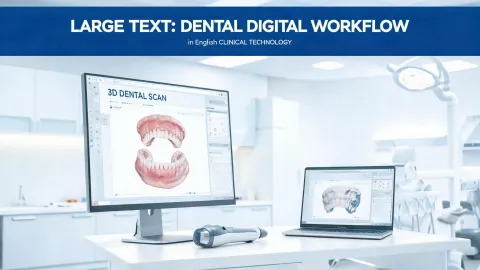
This is the dimension that surprises most clinicians. They assume Straumann's digital ecosystem (coDiagnostIX, guided surgery, CARES CAD/CAM) is a closed, expensive silo. That's not entirely accurate.
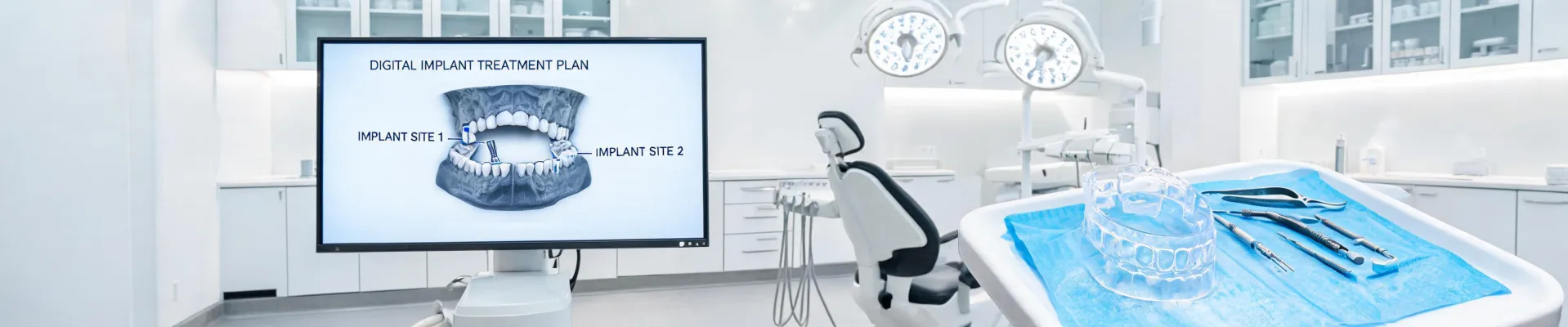
We compared the cost of a guided surgery workflow for a single BLT implant across three scenarios:
- Straumann full stack: coDiagnostIX software license ($1,000-2,000/year), guide fabrication via Straumann partner ($150-250/guide), Straumann implant + TiBase ($X).
- Open-source planning + generic guide: Free planning software (e.g., Blue Sky Plan), third-party guide fabrication ($80-150/guide), generic implant compatible with BLT platform.
- Freehand placement: No guide cost, standard implant, standard healing.
The upfront cost is lowest for freehand, then open-source, then Straumann. But the TCO calculation changes when you factor in:
- Miscounting implant position: In freehand placement, deviations beyond 1mm happen in 10-15% of cases (based on systematic reviews). That can require a $1,000-2,000 CT scan and surgical revision. In guided surgery, deviation is typically 0.5mm or less.
- Prosthetic complications: A malpositioned implant can cause aesthetic issues, screw loosening, or restoration fracture. The cost of a remake alone is $300-600.
- Chair time: Digital workflow saves 20-30 minutes per surgery on average (less time marking, adjusting, verifying). At $300/hour overhead, that's $100-150 savings per case.
On a 50-unit annual volume, the Straumann digital ecosystem adds roughly $5,000-7,000 in upfront costs (software + per-case guide fees). But it eliminates 1-3 potential revision cases per year (let's say 2 × $1,500 each = $3,000) and saves 50 × $100 = $5,000 in chair time. Net cost difference: nearly zero over 1 year, positive in year 2.
Now, that's assuming flawless execution. I've seen labs struggle with coDiagnostIX if they don't have dedicated CAD/CAM support (note to self: document onboarding time next audit). The open-source route is cheaper upfront but demands more technical skill and troubleshooting. For a practice doing 50+ guided cases annually, Straumann's ecosystem is cost-neutral at worst. For occasional guided cases (1-5/year), the open-source route wins.
Conclusion: What to Choose, and When
Choose Straumann (BLT + SLActive) when:
- You're doing immediate-load or early-load cases (you need the speed of SLActive).
- You have a standardized implant inventory (fewer connection variations reduce confusion).
- Your volume justifies the digital workflow investment (30+ guided cases/year).
- You value consistency over cost per unit (which, honestly, most surgeons at the 100+ case level do).
Consider alternatives (generic TiBase, standard surface) when:
- You're doing routine single-tooth replacements in healthy bone with standard healing.
- Your lab has demonstrated capability with generic components (verified fit, no history of issues).
- You're a low-volume (<10 cases/year) practice where digital workflow costs are hard to amortize.
- The patient is highly cost-sensitive and standard healing timelines are acceptable.
One last thing: don't take these numbers as gospel. They're based on one lab network's experience over 4 years. Your setup fees, revision rates, and chair time costs will differ. Run your own TCO calculation—I'm not 100% sure, but I bet the answer will be clearer than any blog post can give you.