$8,500. That's what my first year of implant dentistry cost me in avoidable mistakes. Not the implants themselves. The mistakes around them.
When I decided to bring implant placement into our small clinic, I did what every dentist in my position does: I researched obsessively. Compared surface technologies. Read clinical studies. Called colleagues. Attended two courses. Straumann was the obvious choice—the SLActive surface has arguably the strongest osseointegration evidence in the industry, and the product line covers everything from BLT implants to TiBase abutments, surgical kits, and a digital workflow ecosystem that's genuinely impressive.
So we bought in. Fully.
By month 14, I'd spent $8,500 on mistakes that had nothing to do with the implants. The implants integrated beautifully. SLActive did exactly what it promised. The workflow around them? That's where everything went sideways.
The Deeper Problem: A Digital Workflow Is a Chain, Not a Product
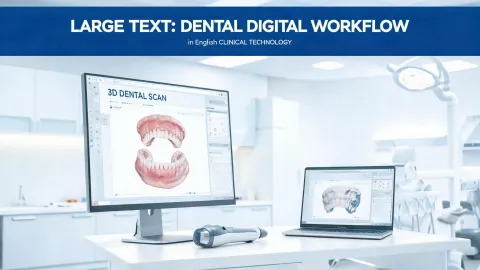
Here's what nobody tells you about a Straumann digital workflow: when you buy it, you're not buying one thing. You're buying a chain of connected components—the intraoral scanner, the planning software (we use coDiagnostIX), the guided surgery kits, the CAD/CAM restorations. Each link works beautifully on its own.
The gaps live between the links.
Gap one: scanner to planning software. The scan has to be flawless. If a scan body is missing, or a surface is overlapped, your virtual implant position is based on incomplete data. I learned this when we had to cancel a case because the surgical guide didn't seat fully over the adjacent molar. It looked perfect in the software. It was absolutely not perfect in the mouth.
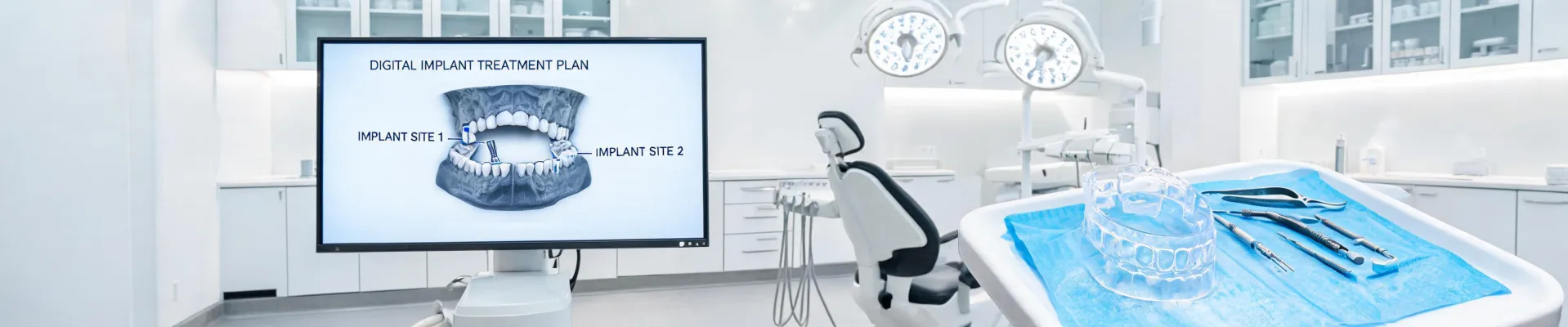
Gap two: planning software to surgical guide. The guide is only as good as the export file. You can't physically verify a virtual model until the guide is in the patient's mouth. By then, the only option is cancel and reschedule.
Gap three: the surgical product to the surgical environment. You can have the best BLT Surgical Cassette, the right surgical motor, a perfect surgical guide—and still be unprepared if your clinical environment isn't set up for the procedure. Equipment is not the same thing as readiness.
That third gap is where small clinics lose money in ways nobody warns us about. It's not the technology that fails. It's the unglamorous stuff we ignored because we were focused on the advanced stuff.
The Costs: Three Lessons I'd Rather Not Have Paid For
Lesson 1: The chemistry analyzer I didn't buy ($3,800)
March 2021. I placed a Straumann BLT implant in a 52-year-old patient. Textbook procedure. The patient mentioned “borderline blood sugar” but had no diabetes diagnosis. My assistant asked if I wanted to run a baseline metabolic panel—we used to send labs out, but I'd cut that service to save money.
“It's one implant,” I said. “Let's just get it done.”
The implant integrated, but it took over 10 weeks instead of the 3–4 weeks you'd expect with SLActive (Source: Straumann's published clinical literature, accessed February 2025). Soft tissue inflammation at week two. Persistent pain through week six. When I finally sent the patient for blood work, the answer was right there: HbA1c of 8.1%. Undiagnosed type 2 diabetes.
The restorative timeline dragged five months beyond where it should have been. Extra visits. Antibiotics. A partial refund, because the experience had gone on long enough that it felt like the right thing to do.
Total: roughly $3,800.
I own a benchtop chemistry analyzer now. It lives in the sterilization room. It cost about the same as one week of that case's chaos.
Yes, I know. Penny wise, pound foolish. My father would've loved pointing that out.
Lesson 2: The spirometer I didn't use ($1,600)
November 2021. A 47-year-old patient with mild, well-controlled asthma. I read the medical history. I just didn't think it mattered for a single implant under local anesthesia.
It mattered.
About 20 minutes into the procedure, the patient started wheezing underneath the surgical drape. Not a full attack—but enough that we stopped immediately. I'll never quite forget the look on my assistant's face. This was not a drill we'd ever run.
We rescheduled two weeks later. I borrowed a portable spirometer from a colleague and measured FEV1 before we started: 71% of predicted. Not catastrophic. But it was a baseline I didn't have the first time, and the second procedure went smoothly.
The cost of the first attempt: 45 minutes of chair time. $240 to reprocess the surgical kit. $150 in consumables. An apology to a patient who'd already taken time off work. I stopped adding when I hit $1,600.
I own a spirometer now. Four hundred dollars. I've used it on eleven patients since, and every one of them appreciated that we checked.
Lesson 3: The surgical gown oversight ($700 plus one very awkward phone call)
February 2022. Our first bone graft plus implant case. The digital workflow was flawless—scan, plan, guide fit perfectly. But when I went to gown up, I discovered we only had standard procedural gowns. Not surgical gowns. Not the sterile barrier garments with reinforced sleeves designed for invasive surgical exposure (AAMI Level 3, in the terminology).
I stood there in my scrubs, staring at the cupboard, feeling like an idiot.
We spent 40 minutes calling neighboring practices. An orthodontist two blocks away saved us. I've never been so grateful to anyone in my professional life.
“You know,” my assistant said on the walk of shame back from picking them up, “I asked about surgical gowns back in December.”
I did not, in fact, know.
The immediate cost: $300 in opened surgical disposables that went to waste, plus a delay that rattled the whole team. The near-miss cost: we were 40 minutes away from starting a $2,000 bone grafting procedure in the wrong surgical attire. It could have been an infection risk. It could have been a malpractice claim. Instead, it was just $700 and an ego reset.
Now we stock surgical gowns in the procedure room. They cost $8–$12 each. I've spent more on a single lunch order for the team. But I'd convinced myself that “we're a small clinic, we don't need the full protocol.”
I was wrong.
The Fix: One Page, Reviewed Twice
After the gown incident, I sat down at the kitchen table at 11 p.m., pulled out a notebook, and wrote down every mistake, near-miss, and “why did nobody tell me this” moment from my first 14 months with implant surgery. The list was longer than I expected. The fixes, it turned out, were shorter than I feared.
I turned it into a one-page surgical readiness checklist. We review it at treatment planning, and again 48 hours before any implant surgery.
- Patient screening data is complete. HbA1c or fasting glucose for every implant patient with metabolic risk factors. Spirometry baseline for any respiratory history—asthma, COPD, smoking-related symptoms. The chemistry analyzer and the spirometer share a cabinet for a reason.
- Every digital file is validated. Scan checked for missing scan bodies. Surgical guide verified against the case plan. STL export confirmed complete before sending to the lab.
- Surgical attire is in the building. Not “someone can order it by Friday.” In the building. Gowns, drapes, gloves—checked physically, not virtually.
- Every role has a trained backup. Small team means cross-training. Period.
- The lab has acknowledged the case. Nobody starts until the lab confirms the restoration can be delivered on schedule. Obvious? Yes. Did I learn it the hard way? Also yes.
In the nine months since we started using this checklist, we've caught eleven potential problems before they became emergencies. The most recent: a surgical guide file that was 30 MB when we expected 22 MB. We spotted the discrepancy before printing.
Small Clinic, Same Standard
I'm not sharing this because I think small clinics are destined to struggle. I'm sharing it because I think we can get this right—if we treat the unglamorous parts of implant dentistry with the same respect we give the technology.
Straumann's digital workflow was accessible to us. The support exists when you ask for it. Plenty of small clinics are placing predictable, beautiful implant cases. The difference between them and the ones who struggle? It's not clinic size. It's not budget size. It's whether you've closed the gaps between the products.
You're not too small to do this right.
You're just too small to get away with the shortcuts.